by UNA | 2019 22, Feb | Announcements
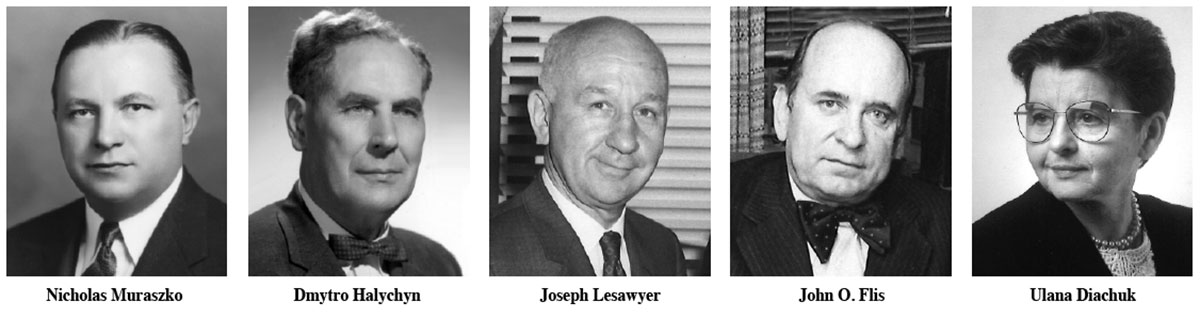 Following is a list of the executive officers of the Ukrainian National Association elected at UNA conventions from 1894 through the convention of 2018. Readers will note changes in terminology in the names of executive offices, e.g. supreme president to president; as well as the elimination of certain executive positions, e.g. supreme vice-presidentess, supreme organizer. The list was compiled based on convention reports, UNA histories and information published through the years in Svoboda and The Ukrainian Weekly. An asterisk (*) indicates that an officer died before completing his/her term of office.
SUPREME PRESIDENTS
Theodosius Talpash, 1894-1895
John Glowa, 1895-1898
Yuriy Khyliak, 1898-1900
Rev. Anthony Bonchevsky, 1900-1902
Rev. Nicholas Stefanovych, 1902-1904
Konstantine Kirczow, 1904-1908
Dmitro Kapitula, 1908-1917
Konstantine Kirczow, 1917-1920
Simon Yadlowski, 1920-1925
Theodore Hrytsey, 1925-1929
Nicholas Muraszko, 1929-1949*
Gregory Herman 1949-1950 (acting president)
Dmytro Halychyn, 1950-1961*
Joseph Lesawyer, 1961-1978
John O. Flis, 1978-1990
Ulana Diachuk, 1990-1994
PRESIDENTS
Ulana Diachuk, 1994-2002
Stefan Kaczaraj, 2002-2018
SUPREME VICE-PRESIDENTS
Michael Yevchak, 1894-1895
Theodosius Talpash, 1895-1896
Oleksiy Kuryla, 1896-1897
Petro Sekerak, 1897-1898
Ivan Dobosh, 1898-1900
Alexis Sharshon, 1900-1902
Michael Kravchyshyn, 1902-1904
Semen Mytrenko, 1904-1906
Ivan Paryliak, 1906-1908
Theodore Kulychytsky-Gut, 1908-1910
Ivan Marton, 1910-1912
Vasyl Suvak, 1912-1914
Ivan Vaverchak, 1914-1917
Andrew Stefanovych, 1917-1920
Theodore Hrytsey, 1920-1925
Michael Uhorchak, 1925-1929
Vasyl Hryshko, 1929-1933
Volodymyr Malewich, 1933-1937
Gregory Herman, 1937-1950
Joseph Lesawyer, 1950-1954
Michael Piznak, 1954-1958
Joseph Lesawyer, 1958-1961
Stephen Kuropas, 1961-1970
John Teluk, 1970-1974
John Flis, 1974-1978
Myron Kuropas, 1978-1990
Nestor Olesnycky, 1990-1994
VICE-PRESIDENT
Nestor Olesnycky, 1994-1998
FIRST VICE-PRESIDENTS
Stefko Kuropas, 1998-2002
Martha Lysko, 2002-2006
Zenon Holubec, 2006-2010
Michael Koziupa, 2010-2018
SUPREME VICE-PRESIDENTESSES
Maria Cheremshak, 1908-1912
Mary Bilyk, 1912-1920
Maria Olshanytska, 1920-1929
Julia Bavoliak, 1929-1933
Maria Olshanytska, 1933-1937
Mary Malevich, 1937-1950
Genevieve Zepko-Zerebniak, 1950-1958
Anna Herman, 1958-1966
Mary Dushnyck, 1966-1982
Gloria Paschen, 1982-1994
VICE-PRESIDENTESS
Anya Dydyk Petrenko, 1994-1998
SECOND VICE-PRESIDENTS
Anya Dydyk Petrenko, 1998-2002
Eugene Iwanciw, 2002-2006
Michael Koziupa, 2006-2010
Eugene Oscislawski, 2010-2018
SUPREME VICE-PRESIDENTS FOR CANADA
Bohdan Zorych, 1966-1970
Paul Yuzyk, 1970-1974
SUPREME DIRECTORS FOR CANADA
Paul Yuzyk, 1974-1990
John Hewryk, 1990-1993*
DIRECTORS FOR CANADA
Peter Savaryn, 1994-1998
Rev. Myron Stasiw, 1998-2002
Albert Kachkowski, 2002-2006
Myron Groch, 2006-2018
SUPREME VICE-PRESIDENT AND RECORDING SECRETARY
Walter Sochan, 1966-1974
SUPREME SECRETARIES/SUPREME RECORDING SECRETARIES
Rev. Ivan Kostankevych, 1894-1895
Rev. Nestor Dmytriw, 1895-1896
Rev. Nicholas Stefanovych, 1896-1897
Rev. Ivan Ardan, 1897-1898
Rev. Anthony Bonchevsky, 1898-1900
Denys Pyrch, 1900-1904
Simon Yadlowski, 1904-1912
Michael Uhorchak, 1912-1918
Stefan Milanowycz, 1918-1920
Ivan Kashtaniuk, 1920-1933
Dmytro Halychyn, 1933-1950
Gregory Herman, 1950-1957*
Jaroslaw Padoch, 1958-1974
Walter Sochan, 1974-1994
NATIONAL SECRETARIES
Martha Lysko, 1994-2002
Christine Kozak, 2002-2016*
Yuriy Symczyk, 2016-2018
ASSISTANT SUPREME SECRETARIES:
Denys Pyrch, 1898-1900
Konstantine Kirczow, 1900-1902
Joseph Kulchytsky, 1904-1906
SUPREME TREASURERS
John Glowa, 1894-1895
Yuriy Khyliak, 1895-1898
Kindrat Kotanchyk, 1898-1900
Oleksiy Shlianta, 1900-1902
Alexis Sharshon, 1902-1917
Vasyl Levchyk, 1917-1933
Roman Slobodian, 1941-1966
John Kokolski, 1966-1968*
Peter Pucilo, 1968-1972*
Ulana Diachuk, 1972-1990
Alexander Blahitka, 1990-1994
SUPREME FINANCIAL SECRETARIES
Simon Yadlowski, 1906-1920
Roman Slobodian, 1920-1937
SUPREME FINANCIAL SECRETARY-TREASURER
Roman Slobodian, 1937-1941
TREASURERS
Alexander Blahitka, 1994-1997*
Stefan Kaczaraj, 1997-1998 (acting treasurer)
Stefan Kaczaraj, 1998-2002
Roma Lisovich, 2002-2018
ASSISTANT SUPREME TREASURER
Andrey Yankovych, 1904-1906
SUPREME ORGANIZERS:
Stefan Hawrysz, 1974-1978
Wasyl Orichowsky, 1978-1982
Stefan Hawrysz, 1982-1986
by UNA | 2019 22, Feb | Announcements
 PARSIPPANY, NJ – Throughout 2019, the Ukrainian National Association, one of the oldest fraternal insurance societies in America, will celebrate a landmark anniversary – 125 years of protecting Ukrainian Americans and Ukrainian Canadians, and serving Ukrainian communities.
The year of events will begin on Friday, February 22, in Shamokin, Pa., the city where the Ukrainian National Association (UNA) was established exactly on that day in 1894.
Three members of the UNA Executive Committee, President/CEO Stefan Kaczaraj, COO/National Secretary Yuriy Symczyk and CFO/Treasurer Roma Lisovich, will travel to Shamokin to receive a proclamation from Mayor John Brown congratulating the UNA on its 125th anniversary and commemorating Shamokin as the UNA’s birthplace.
“United by the bond of our common Ukrainian heritage, the UNA was established as a fraternal insurance society to protect our people from the stress of financial uncertainty,” noted Mr. Kaczaraj. “We have done this successfully for more than 12 decades – truly a unique legacy in America’s history. At the beginning of the 20th century, there were more than 600 fraternal insurance societies. Now there are less than 100. We are one of them. This is a testament both to the commitment of the UNA to our members and our community, as well as the loyalty of our members and our community to the UNA. I am proud to say that, for 125 years, the UNA has been insuring our community.”
“UNA: Insuring Our Community for 125 Years” is the theme for the anniversary year, and a jubilee logo was designed by Nadiya Folk to reflect this milestone achievement. Throughout 2019, the UNA will introduce special programs and benefits to celebrate the 125th anniversary, among them a restructured youth scholarship benefit, as well as a charitable giving benefit. In addition, the anniversary will be actively promoted at festivals and community events throughout America and Canada. For a good sense of UNA achievements through the decades, a photo archive of UNA history has been posted for viewing on the UNA website: www.unainc.org.
The finale for the year will be a grand concert – “Celebrating 125 Years!” – that will be held Saturday, November 2. The concert will include performers from the United States, Canada and Ukraine. Among the performances will be dynamic dances by the world-renowned Ukrainian Shumka Dancers from Canada, as well as the lyrical sounds of the bandura by the Women’s Bandura Ensemble of North America. Also performing will be virtuoso violinist Vasyl Popadiuk.
The venue for the concert is Dolan Performance Hall, a state-of-the-art theater on the campus of the College of St. Elizabeth in Morristown, N.J. Easily accessible both by car and public transportation, the theater is centrally located for dozens of major Ukrainian communities in Pennsylvania, New Jersey, New York, Connecticut and other states in the mid-Atlantic and Northeast from which guests will be traveling. For those planning to travel for more than just the evening, the theater is near hotels and a train station, close to major airports, and an easy trip into Manhattan.
In mid-2018, the UNA 125 Committee was established to plan and manage anniversary events. The committee chair is UNA General Assembly member Bohdana Puzyk. “I consider this to be a great honor to have been asked to chair a committee that will plan the celebrations of such an auspicious year – honoring 125 years of the UNA’s continuous service to the Ukrainian communities in the United States and Canada. For generations, the UNA has been a powerful force for keeping Ukrainians in the diaspora united, through our newspapers, our publishing house, summer camps for children, scholarships for students, and major efforts such as the monument of Taras Shevchenko in Washington D.C., as well as numerous projects to battle against Soviet disinformation. We have much of which to be proud,” UNA Advisor Puzyk commented.
She added, “To help plan this year, I am fortunate to be working with a very talented and dedicated team that includes Nadiya Symczyk Folk, Roma Hadzewycz, Roman Hirniak, Irene Jarosewich, Myron Kolinsky, Roma Lisovich, Eugene Osidacz, Eugene Serba, Tanya Soltys, Oksana Stanko, Yuriy Symczyk and Luba Walchuk,” UNA Advisor Puzyk commented.
The Mission of the UNA
In 1894, the establishment of the UNA was driven by the need to help the thousands of new immigrants arriving from Ukraine who worked dangerous jobs in the coal mines of Pennsylvania. Deaths were frequent, and young widows did not have the ability to pay for a funeral, much less receive future income. From the original “burial policies” that paid funeral expenses and provided income to the bereaved families, the UNA expanded into a full-service insurance provider with tens of thousands of members.
The distinction of being a fraternal insurance society is important. As a fraternal society, the UNA is a not-for-profit association. Proceeds from the sale of insurance products are not given to anonymous investors; rather, proceeds go directly to provide benefits to UNA members and to Ukrainian communities.
In keeping with a resolution adopted at the 39th Regular Convention of the UNA held in May 2018, special emphasis will be focused throughout the year towards growing the endowment fund for UNA publications.
“Communications are essential to maintaining the UNA network and serving our communities, both in print or electronically,” said Mr. Symczyk. “The UNA newspaper Svoboda, which began publication in 1893, a year before the founding of the UNA, strongly advocated for the establishment of this fraternal society. The UNA is indebted to the first editor of Svoboda, the Rev. Hryhoriy Hrushka, who consistently wrote about the vital need for Ukrainians to come together and help each other. The UNA has a long history of promoting the interests of Ukraine and Ukrainians through the written word and, while it may now deliver the information in different formats besides on paper, most notably electronically through e-mails, social media and websites – the need for good writing, good editing, good content remains. The UNA Publication Endowment Fund will support this goal of sustaining quality communication.”
Throughout 2019, information about the UNA and 125th anniversary events and activities will be available through the UNA publications Svoboda and The Ukrainian Weekly, both in print and online (svoboda-news.com and ukrweekly.com), on the UNA website (unainc.org), as well as by following Ukrainian National Association on Facebook.
Irene Jarosewich is an advisor on the UNA General Assembly.

by UNA | 2019 22, Feb | Announcements
Редакційна зі „Свободи“ (22 лютого 2019 року)
Сьогодні виповнюється 125 років від дня заснування Українського Народного Союзу на північно-американському континенті. Саме з того дня бере свій відлік історія української громади у США. Тобто з моменту – застановімося над цією думкою – свідомого об’єднання прибульців з різних українських країв у спільну громадсько-допомогову організацію задля подвійної мети – задля легшого й успішнішого входження в абсолютно нове для них‚ абсолютно інакше американське суспільство‚ і водночас – задля збереження своєї етнічної ідентичности.
Відомо‚ що перші шукачі ліпшої долі з Галичини‚ Закарпаття‚ Буковини ступили на американську землю ще наприкінці 1870-их років. Окремі українці навіть раніше. Скажімо‚ киянин отець Андрій-Агапій Гончаренко опинився у Бостоні в січні 1865 року‚ згодом переїхав до Каліфорнії. Ми дещо знаємо про нього лише завдяки тому‚ що залишив по собі слід „чорним по білому“ – видавав газету „Аляска Геральд“. Також і про героя Громадянської війни і особистого товариша Авраама Лінкольна генерала Івана Турчина ми б нічого не знали‚ якби не польські автори‚ які зробили з цього леґендарного українця поляка‚ дарма що американці називали його „Відважним козаком“.
Є ще спорадичні свідчення про присутність українських людей в різних американських штатах і канадських провінціях ще в другій половині ХVІІ ст. Але це все ті випадкові „пазли“‚ з котрих годі скласти виразну документальну картину. Залишається лише пошкодувати‚ що багато цінного матеріялу пропало для докладного дослідження тодішніх обставин і людських доль. Оце вже направду – тіні забутих предків.
А незабуті починаються з заснуванням УНСоюзу: його історія повною мірою збігається з історією нашої американсько-канадської діяспори. Бо кожна без винятку ділянка життя об’єднаної у цій великій організації громади задокументована. Зі сторінок „Свободи“‚ а відтак і „The Ukrainian Weekly“‚ зі щорічних союзових альманахів‚ з архівів сотень Відділів УНСоюзу можна безпомильно відтворити системну‚ багатогранну і багаторівневу історію американської України. Довідаємося‚ хто і де будував церкви‚ школи і народні доми‚ хто навчав дітей і виховував молодь‚ хто засновував перші хори‚ оркестри і драматичні гуртки‚ спортові оселі‚ пластові і сумівські табори‚ наукові центри і видавництва‚ хто не дав заглухнути українській ідеї в людських серцях і хто завдяки своїм талантам і праці здобував загальноамериканське визнання і славу.
Проте‚ Український Народний Союз має за собою ще більшу‚ ще унікальнішу заслугу – справді загальноукраїнського історичного значення‚ бо кидає ясне світло на дуже складне питання: чому тут‚ в Америці і Канаді‚ так швидко й успішно відбувся процес переростання української етнічної генези в генезу національну? Адже перша хвиля іміґрантів‚ людей з різних закутків‚ були слабо між собю пов’язані навіть етнічним зв’язком‚ вже не кажучи про національне самоусвідомлення. Й от за лічені роки‚ ще перед Першою світовою війною‚ постає духовно й культурно єдина українська громада‚ національно свідома – попри другорядні етнічні‚ конфесійні чи мовні різниці. Як це могло статися – в той час‚ коли на матірній землі цей процес тривав так тяжко і так довго? Відповідь – в цьому одному слові: свобода. У пригнобленій чужими державами бездержавній Україні національна свідомість не мала можливости піднятися й набути сили. І тільки в Америці й Канаді‚ країнах свободи‚ українці довели собі і світові‚ що вони є єдиною‚ закоріненою у віки‚ а тому незнищенною нацією.
by UNA | 2019 22, Feb | Announcements
Editorial from The Ukrainian Weekly (February 24, 2019)
This week’s issues of both Svoboda (issue date February 22) and The Ukrainian Weekly (February 24) have special sections dedicated to a milestone anniversary of our publisher, the Ukrainian National Association – its 125th.
The UNA is the oldest and largest Ukrainian fraternal organization. Indeed, it is among the oldest fraternal organizations in the United States. President/CEO Stefan Kaczaraj points out in a story about the UNA jubilee that appears on page 5 of this issue: “At the beginning of the 20th century, there were more than 600 fraternal insurance societies. Now there are less than 100. We are one of them. This is a testament both to the commitment of the UNA to our members and our community, as well as the loyalty of our members and our community to the UNA. I am proud to say that, for 125 years, the UNA has been insuring our community.”
It was back on February 22, 1894, that a group of Ukrainian (then called Ruthenian or Rusyn) activists convened in Shamokin, Pa., for the founding meeting of what would become the Ukrainian National Association. Svoboda reported: “…on the day when all America celebrates the birthday anniversary of the great George Washington, fearless fighter for liberty and the rights of man, Rusyn priests, delegates of Rusyn brotherhoods and Rusyn patriots from many areas assembled at 9 a.m. in the Ukrainian church in Shamokin, Pa., to ask God’s help in launching this all-important project – the founding of the ‘Ruskyi Narodnyi Soyuz.’ ”
Those pioneers of the UNA had heeded the call of the biweekly newspaper Svoboda – founded in September 1893 in Jersey City, N.J. – which advocated the establishment of “a national organization… that would embrace each and every Rusyn no matter where he lives.” (An excerpt from that historic editorial dated November 1, 1893, appears to the right.) The paramount purpose of this organization, Svoboda explained, was to “work together to improve our lot in this new land.” This new national organization would seek to help the infirm and the widowed, promote education and enlightenment, and encourage immigrants to become American citizens and take an active part in the political life of their new country. At the same time, this organization would promulgate knowledge about the language, history and heritage of its members’ ancestral homeland.
At the fraternal organization’s first convention, held on May 30, 1894, in Shamokin, there were 17 delegates and assets totaled $220.35. It was decided that Svoboda would serve as its official organ, even though the paper was not owned by the organization. Significantly, during that convention “Shche Ne Vmerla Ukraina” was heard for the first time in America, performed by the choirs of Olyphant and Shamokin. (The song was adopted as Ukraine’s national anthem in 1917.)
By 1904, as UNA historian Dr. Myron B. Kuropas has documented, the RNS was undergoing ethnonational development and increasingly identifying as Ukrainian. As a result, at the 1914 convention the name of the RNS was changed to Ukrainian National Association. An announcement of the convention’s decisions published in Svoboda noted that the name change came as the fate of Ukraine was being decided during wartime and in the 100th anniversary year of Shevchenko’s birth. (It is worth noting that Shevchenko’s words “Uchitesia, braty moyi…” first appeared atop Svoboda’s front page in its premiere issue, and that Shevchenko is revered as the patron of the UNA.) And thus, “the organization …overtly acknowledged its connection to the 40-million-strong Ukrainian nation.”
The rest, as they say, is history. The Ukrainian National Association would go on to play a leading role in the development of Ukrainian American community life, as readers will see in this special section. Today, it continues its involvement in our community as an organization with a membership base and assets that have grown exponentially since its founding.
Dear Readers, please join us in celebrating the UNA’s 125 years of achievements and service to our community and our nation.
by UNA | 2019 22, Feb | Announcements
З промови Президента Стефана Качарая на відкритті 39-ої Конвенції УНСоюзу в 2018 році.
Обернімося назад – в минулі десятиріччя‚ обернімося у повне випробувань ХХ ст.‚ коли болючі виклики приходили один за другим: Велика депресія 30-их років‚ Друга світова війна‚ повоєнне зрушення народів. Все довкола вирувало‚ як океан в бурю. Витримували лише кораблі з міцними вітрилами і талановитими та відважними капітанами.
Український Народний Союз був саме таким кораблем. Велика історія українців Америки ще не написана і‚ можливо‚ ніколи не буде написана – саме тому‚ що це справді велика‚ справді особлива історія‚ й охопити її зміг би хібащо цілий інститут‚ спеціяльно для цього створений. Проте якщо б це колись все ж сталося‚ то я певен‚ що вся її повчальність полягатиме в одному слові: самоорганізація.
124 роки тому наші батьки‚ діди і прадіди в Америці об’єдналися і здійснили це без жодного тиску ззовні‚ без найменшого примусу‚ без державних указів чи директив – на основі тільки доброї волі‚ на основі взаємної підтримки‚ на основі національної і соціяльної солідарности. Це той цінний досвід‚ котрий буде потрібний для кожного наступного покоління.
by UNA | 2019 22, Feb | Announcements

13-та Конвенція УНСоюзу. Бафало, Ню-Йорк, 7-10 вересня 1914 року.
Уривок зі статті ,, УНСоюз вчора, сьогодні і завтра” з Альманаху Українського Народного Союзу за 1984 рік.
В Україні не було організацій типу братських союзів в Америці. Тому ми знали про існування Українського Народного Союзу, але мали дуже слабке уявлення про нього. Пригадаймо, що коли нахлинула до Америки хвиля українських іміґрантів після Другої світової війни, то довгий час нові українські мешканці нюйоркського „давнтавну“ вважали, що таким самим є ціле місто Ню-Иорк. І скільки років треба було, щоб українські поселенці в Америці усвідомили, що Ню-Йорк не є цілою Америкою, та скільки років треба було, щоб взагалі пізнати Америку як країну не тільки різнорідну своєю географією і виглядом окремих стейтів, але і як країну контрастів, у яких трудно визнаватися.

Теодосій Талпаш – перший предсідник УНСоюзу.
І тому нам, українським людям у „старому краю“, навіть трохи смішно було чути, що Український Народний Союз наші земляки в Америці називають „Батьком Союзом“. Ми не орієнтувалися і не знали, що від часу заснування Союзу 90 років тому насправді аж до вибуху Другої світової війни у 1939 році був УНСоюз для американсько-української громади „батьком“.
На цю почесну назву справедливо заслужив собі, опікуючись громадою буквально в усіх ділянках її життя. (…)
УНСоюз займався обороною молодої української держави на рідних землях. УНСоюз дав ініціятиву до створення Української Народної Ради, яка перетворилася у „Федерацію українців у З’єдинених Державах“. (…) УНСоюз ніколи не втрачав з очей України і тому його пожертви йшли на Рідну Школу в Західній Україні і на Фонд голодуючих, на Фонд Визволення України, на Фонд Січових Стрільців, — на всі ті установи й організації в Україні, які потребували матеріяльної допомоги. (…)

о. Іван Констанкевич – перший головний секретар УНСоюзу.
Коли трагічний для України кінець Другої світової війни викинув на північно-американський континент кругло 100 тис. нових іміґрантів, діяпазон діяльности УНСоюзу мусів природно звузитися. Заснування цілої широкої мережі окремих організацій з усіх ділянок життя громади перебрало від УНСоюзу різні його попередні журби. Але не цілком. Візьмім, наприклад, науковий сектор.
Наукове Товариство ім. Шевченка, Українська Вільна Академія Наук і Шкільна Рада УККА – це дуже неповний список існуючих в Америці клітин наукового світу. Постав Український Науковий Інститут при Гарвардському Університеті, існує окреме Історичне Товариство, існують різні видавництва, організації й установи. Але саме УНСоюз видав своїм трудом і фінансами двотомову англомовну Енциклопедію Українознавства й вичерпний однотомовий англомовний твір „Історія України-Руси“ Михайла Грушевського.

Івна Ґлова – перший головний касир УНСоюзу.
Немає другої установи ані організації в „американській Україні“, яка рівнялася б числом свого членства, своєю повагою, своїм авторитетом і своїми заслугами у минулому з Українським Народним Союзом. У великій мірі спричиняється до цього факт, що УНСоюз видає „Свободу“ й англомовний „Український Тижневик“. „Свобода“ була і є провідним керівним українським часописом у всьому українському вільному світі.
by UNA | 2019 22, Feb | Announcements
Reprinted below are excerpts of the Svoboda editorial of November 1, 1893, which called for the establishment of a fraternal organization for Ukrainians in the United States. The front-page editorial was titled “We need a national organization.” (At that time, Ukrainians were known as Ruthenians, and the original Ukrainian text of the editorial referred to “Rusyny.” In the translation below, which is reprinted from “Ukrainian National Association: Its Past and Present,” the 70th anniversary history of the UNA written by Anthony Dragan, the term “Ruthenian” has been replaced by “Ukrainian.”)
…we promised that we would explain how we, Ukrainians, living here in freedom, can improve our lot and show our neighbors that the Ukrainian people are also part of America and occupy a place of honor among all other peoples. …
Just as the fish needs water, as the bird must have wings, as the thirsty need to drink and the hungry need bread, just as every one of us needs air, so do we all Ukrainians scattered across this land need a national organization, namely such a brotherhood, such a national union that would embrace each and every Ukrainian no matter where he lives. One man cannot lift a heavy stone, but when three or four men put their strength to it, the stone will soon be lifted, it is just as difficult for one man to rid himself of want and poverty, but with the help of a few he can do it. One man cannot help all, but all can easily help the man.
It is clear then that in unity there is strength, and it is not easily defeated. Therefore, let us unite brothers, voluntary exiles from our native land, our fatherland, let us come closer together and get to know each other better, and take a closer look at our poverty, our want, our shortcomings, our needs. Let us exchange ideas, let us open our hearts to each other and see how we can solve, our problems together, and rid ourselves of our common ills!
…we Ukrainians always seem to be behind in everything. We have nothing and we are treated as nothing. Come now, brothers, let’s wake up, let us get to work. Let us look how others have reaped such good harvests, while we do not even know where to buy a sickle. Let us finally rid ourselves of this passive slumber, this negligence and indifference, let us stop saying “oh, leave things as they are,” let us follow the example of others and show that we too are strong and that we can take care of ourselves. There are many of us here now – hundreds of thousands of Ukrainians from both sides of the green Carpathian Mountains.
After long deliberations, dear brothers, on the needs of the Ukrainian American people, we have come to the conclusion that we should share with you an idea born within our soul out of deep love and concern for the Ukrainian people. If this idea, this thought becomes a reality, the future generations born in this land of the free will thank us and remember us kindly and adorn our graves with flowers nursed by tears of joy and gratitude. Calling on Almighty God to bless this seed which we throw into the Ukrainian tillage, we wish to inform the Ukrainian worker toiling hard either in dark mines or in factories where death lurks behind thousands of wheels, that it is imperative to create a national organization in America known as the Ukrainian National Association which would be open to the Ukrainian workers only, financed by their moneys to assist needy fellow workers, controlled and governed by the workers, who would thus maintain and administer their own funds.
The aims of the Ukrainian National Association would be as follows:
• to help the ailing and to pay benefits after death;
• to establish reading rooms and evening schools for adults;
• to promote enlightenment among our people with the help of inexpensive publications, as it is being done in the old country;
• to insist that Ukrainians become American citizens;
• to organize political clubs and to take an active part in the elections;
• to defend our people against sharks, crooks and operators.
To ensure successful development of the Ukrainian National Association, it will be necessary to purchase a home in a city that would be found most appropriate, and to name it the Ukrainian National Home. …
A new Ukrainian generation is rapidly growing up here in America, but who is to provide a good future for the Ukrainian youth? What will happen if this youth grows up without knowledge of the Ukrainian language, Ukrainian history and Ukrainian religion?
It would be the responsibility of the Ukrainian National Association to find out how many Ukrainian children of school age there are in various cities, and whether the people themselves can maintain a teacher or if outside help is needed.
We are certain that this idea, this plan of ours will be welcomed by Ukrainians in all America, although we expect to find many who will think that all of this is quite unnecessary.
Come what may, we are bravely calling on the Ukrainian people: Have faith in our idea! We swear to God Almighty that our sole concern is the good of the people. Wake up and see who is your brother and who wishes you well. You have eyes, look at what is happening around you, how you are being abused and ignored, and how only your work, bathed in sweat and blood, is appreciated by those who care solely for their own pockets. They get rich on your ignorance, stupidity and helplessness while you, poor man, rot deep in the mine or, like an ox, pull trucks in the factory, slaving for everybody but yourself… But when you become ill and die in pain, your friends must beg for money among your own people so that your sinful body is not thrown to the dogs but is buried in a Christian way with a cross on your grave, humbly awaiting the day of resurrection.
We firmly hope and believe that our call will not be the voice of one crying in the wilderness and that our dear Ukrainian friends will raise their own voices and write to us.
If our fellow Ukrainians fail to respond to our call and if they neglect this important and burning matter, they will have given a sad account of their spiritual maturity and determination. But we do not believe that, for our people will raise their mighty voice and Ukrainians everywhere will say: We need the Ukrainian National Association, we must get to know each other better, we must unite, we must work together to improve our lot in this new land!
by UNA | 2019 22, Feb | Announcements
The editorial below was published in the February 20, 1994, issue of The Ukrainian Weekly, which was dedicated to the centennial of the Ukrainian National Association.
One hundred years ago, 10 brotherhoods, having assets totaling $220 and a total membership of 439, resolved to form the Ukrainian National Association (then known as the Ruskyi Narodnyi Soyuz). They acted on the suggestion of a historic editorial that appeared in Svoboda on November 1, 1893: “Ukrainians scattered across this land need a national organization, namely such a brotherhood, such a national union that would embrace each and every Ukrainian no matter where he lives. …in unity there is strength, and it is not easily defeated….”
On February 22, 1894, the word became deed. The Ruthenian National Association was established, “it has come to be,” proclaimed Svoboda. The newspaper editorialized: “Dear brothers, now that a great number of us have gotten together and founded the association, let us all join it. … You, who had been given up for lost by your brothers in Ukraine, let the world know that you are alive, and that here, in America, the life of the Ukrainian community is throbbing with vigor and activity. …The Ukrainian National Association has been founded, and the Ukrainian people in America have risen from the dead…”
And so it was, the Ukrainian community in North America grew and prospered, as did the Ukrainian National Association. Today, at 100 years of age, it has assets of $72.5 million and a membership of 64,000. it has grown far, far beyond what it was at the time of its founding. But one thing has remained constant: its devotion to its founding principles. Throughout its history, the UNA has always extended a helping hand to its members, the Ukrainian community in the United States and Canada, Ukrainians wherever they have settled, and to Ukraine.
The UNA has supported countless community causes, from the erection of a monument to Taras Shevchenko in Washington and the creation of the World Congress of Free Ukrainians to the establishment of Ukrainian studies chairs and the Ukrainian Research institute at Harvard University, it has published numerous books, from Mykhailo Hrushevsky’s “History of Ukraine” to Robert Conquest’s “The Harvest of Sorrow.” It was a major donor to the work of the U.S. Commission on the Ukraine Famine as well as to the Harvard Project on the Millennium of Christianity in Ukraine.
Not to be forgotten are the UNA’s illustrious endeavors in the field of publishing (two newspapers, Svoboda and The Ukrainian Weekly, as well as the Veselka children’s magazine), its scholarships for college students in the U.S. and Canada, its roles as patron of the arts and promoter of sports, its care for the elderly, and its assistance to needy victims of natural and man-made disasters, be they in the U.S., Ukraine, or any part of the Ukrainian diaspora.
With the declaration of Ukraine’s independence, the UNA focused on helping the people of that formerly Soviet-dominated land. It created a Fund for the Rebirth of Ukraine that has supported many a project, from textbooks for the children of Ukraine to handbooks for businesspersons, and it has initiated its own educational projects, the Teaching English in Ukraine Program and the Summer institute for teachers of the English language. It also funds the Kyiv Press Bureau that is staffed, on a rotating basis, by editorial staffers of The Ukrainian Weekly – the first full-time Kyiv-based press bureau to serve a Western news outlet.
In short, the UNA has always been there for all Ukrainians. Will it continue to be there in the next 100 years? Will the Ukrainian National Association’s second century be as illustrious as its first? The future depends upon both the new generations of Ukrainians who have grown up in North America and the new wave of immigrants recently arrived on these shores from Ukraine. Will they see the value of the Ukrainian National Association, become its members and take upon themselves the organization’s leadership? That, dear readers, only time will tell.
However, we can state with all certainty that the UNA, as it marks the centennial of its humble yet profound beginnings, is moving ahead in keeping with its anniversary motto: “With reverence for the past, with a vision for the future.”
by UNA | 2019 22, Feb | Announcements
Редакційна, 21 лютого 2014 року.
22 лютого відзначатиме своє 120-річчя Український Народний Союз – найстарша і найбільша братська, забезпеченево-допомогова організація у Північній Америці.
У 1894 році розрізнені острівці українства‚ зокрема найбільший з них – Братство свв. Кирила і Методія – злилися в Український (тоді він називався – Руський) Народний Союз. Тисячі іміґрантів з України‚ неймовірно тяжко працюючи у вугільних копальнях Пенсильванії, не мали грошей, щоб покрити видатки на похорони своїх товаришів, котрі‚ на жаль‚ нерідко гинули у шахтах. Отож початки УНСоюзу, можна сказати, лежать глибоко у вугільних шахтах Пенсильванії.
Львівський Митрополит Сильвестер Сембратович вислав до Америки о. Івана Волянського, який разом з дружиною осів у містечку Шенандоа, в Пенсильванії, де відслужив 19 грудня 1884 pоку перше богослуження, організував першу українську парохію, першу українську церкву.
У 1890 році приїхав з Галичини о. Григорій Грушка, який перший почав об’їздити українські оселі й заохочувати іміґрантів будувати свої церкви. Сам він осів у Джерзі Ситі, Ню-Джерзі, де 15 вересня 1893 року заснував газету „Свобода“, яка стала ініціятором створення УНСоюзу. Вже в перших числах газети оприлюднено потребу негайного заснування української народної організації, яка перебрала б провід у житті заробітчан. Таким чином постав 22 лютого 1894 року теперішній УНСоюз.
Сьогодні‚ оглядаючись на минуле з висоти 120 років‚ бачимо‚ що за цей час створено розгалужену і водночас чітку організаційну структуру у вигляді окремих відділів, які доступні для усієї українсько-американської та українсько-канадської громади. УНСоюз видає два тижневики, „Свободу“ і „The Ukrainian Weekly“. Створено Центр української спадщини на гірській оселі – „Союзівці“, яка стала символом української громади в діяспорі. УНСоюз надає стипендії українським студентам, допомагає Острозькій академії, здійснює інші благодійні акції.
Про професійний і громадсько-братський рівень УНСоюзу добре свідчить та обставина‚ що коли багато фінансових установ у США занепали після обвалу фондового ринку 2008 року, УНСоюз у цих дуже конкурентних, динамічних та постійно змінних умовах надійно захистив своїх членів і запевнив їхнє стабільне майбутнє.
УНСоюз безперервно розвивається‚ щоб і надалі відповідати сучасним вимогам, щоб наші діти та діти наших дітей знали й усвідомлювали історичну вартість цієї організації, котра була така важлива в побудові українсько-американської громади. „УНСоюз і громада – друзі на все життя“ – це гасло залишається дороговказом УНСоюзу.
by UNA | 2019 22, Feb | Announcements
Редакційна, 20 лютого 2004 року.
22 лютого виповнюється 110 років від дня заснування Українського Народного Союзу. Неможливо не схвилюватися, подумавши, що ця подія сталася ще в XIX ст., бо ж тепер ми живемо вже в XXI! І не випадково вона припала саме на цей день, а не на інший: дата 22 лютого має подвійне ідейне звучання, адже це день народження першого Президента Америки Джорджа Вашінґтона, з іменем якого пов’язані засади людських прав і свобод, на котрих засноване американське суспільство. Водночас ці демократичні засади відкривали перед першими еміґрантами з України можливість об’єднати зусилля, розпочати організоване і надзвичайно важливе за змістом громадське життя, передусім в ділянці матеріяльної і духовної взаємодопомоги.
„Як є потрібна для риби вода, для птаха – крила, як спраглому – криниця, як голодному – хліб, як, нарешті, кожному треба повітря, так само і для нас, розсіяних тут українців, треба народної організації, тобто такого братства, такого всенародного товариства, до котрого кожен українець, де б він не був, де б і далеко не жив, повинен до цього братства, до цієї великої української родини, фамілії, належати”, – писав наприкінці 1893 року перший головний редактор „Свободи” о. Григорій Грушка.
І коли 1 березня 1894 року газета повідомила про установчі збори у Шамокіні 22 лютого і про їхній історичний результат – заснування української допомогово-братської організації, то цей небуденний заголовок газетної статті – „Совершишася!” – означав зматеріялізування і на вільній землі Вашінґтона найдорожчої з усіх українських ідей – ідеї загальнонаціональної і загальнохристиянської солідарности.
Потрапивши в умови свободи, наші люди не тільки перемогли всі іміґрантстькі труднощі і встояли на ногах, але при цьому виявили надзвичайно цінні прикмети – здатність до об’єднання, до взаємодопомоги, до активного культурного і духовного життя, до свідомого відповідального збереження своєї національної ідентичности, рідної культури, і водночас – до свідомого і відповідального засвоєння культури країни, котра їх прийняла. Ріст і розвиток УНСоюзу – це невпинний і послідовний ріст і розвиток нашої людини і нашої громади.
110 років діяльности УНСоюзу – це довга дорога, вимощена суспільно-корисними справами. „Єдина українська установа породила, виплекала і пустила в люди, стільки зорганізованого доробку, що його годі навіть перечислити. А тому, коли хтось із нас появлявся вперше в цьому вавилонському граді, Ню-Йорку, негайно квапився побувати за Гудзоном, сподіваючись знайти там і торкнутися власними руками тієї Мекки української – УНС… Можливо, в цілості плянетарного засягу ці три літери, УНС, займають непомітне місце, їх не знайдете у популярних енциклопедіях, але з якоїсь іншої, інтимнішої точки зору ця інституція таїть в собі великий, шляхетно-повчальний зміст чи не найскладніших людських проблем нашого збентеженого світу”, – писав ще 30 років тому Улас Самчук.
Життя людське ніколи не обходиться без проблем, тим більше життя еміґрантське, як тепер кажуть, діяспорне. Тут важливо мати на щось спертися, і УНСоюз був саме такою надійною опорою у фінансовому і національно-громадському, людсько-братському розумінні. Були легші, успішніші часи, були й тяжчі, були й дуже тяжкі, якщо згадати повоєнну нагінку всіх лівацько-проросійських сил Америки на американське українство і конкретно на УНСоюз як провідну його організацію, але ця опора, фінансово-зебезпеченева і моральна, не впала і навіть не захиталася, на демократичних принципах гуртуючи громаду і в той самий час твердо виступаючи в обороні українського народу та його невід’ємного права на волю і незалежність. Предметом нашої гордости є, що ця праця не лише історія – вона продовжує бути щоденною дійсністю.