1994: У 100-річчя УНСоюзу

Редакційна, 19 лютого 1994 року. 

Коли 100 років тому з ініціятиви ,.Свободи“ постав, як братська допомогова установа, Український Народний Союз, засяг його зацікавлення і праці охоплював буквально всі ділянки життя тодішньої української громади в Америці. Український Народний Союз перший почав видавати цілий ряд самоосвітніх книжечок бібліотеки „Просвіта“, як і серію англомовних творів з інформаціями про Україну, її народ, історію і культуру. Той же Союз організував хори й аматорські театральні вистави, як і став першою установою, що дбала про покращання економічного стану бідного суспільства, але в той чам час дбав теж. щоб на Версальську мирову конференцію, що закінчувала Першу світову війну, вислати відсіль українську делеґацію, щоб за кулісами діяти у користь України. 

Піонери УНСоюзу здавали собі справу з величезних вимог тодішнього часу, коли була ще незорена нива українського поселення на цьому континенті, і з величезних труднощів, які чекають на шляху організування тієї молодої громади. Тому з ініціятиви Українського Народного Союзу постав Злучений Український Американський Допомоговий Комітет (ЗУАДК), авторизована державою українська установа, яка відіграла історичну ролю в переселенні з Европи десяток тисяч українських втікачів, жертв Другої світової війни, які рятували життя від большевицької сарани, що наступала зі Сходу. 

І щойно з приїздом до Америки тієї нової хвилі українських іміґрантів пішла вже швидким ходом диференціяція життя і творчости українського суспільства в Америці. Щойно тоді постали окремі установи й організації, які перебрали на себе тягар праці в ділянках економіки і культури: постали українські щадниці й кооперативні банки, постали школи при церквах, виростали народні доми, відродилося на американському ґрунті Наукове Товариство їм. Шевченка, постала Українська Вільна Академія Наук, згодом постали такі перлини української культури, як Український Науковий Інститут при Гарвардському Університеті й Український Інститут Америки у Ню-Йорку. Постали музеї, заснувались великі хори й театр з професійними силами, спортові товариства, жіночі і молодечі організації. 

А втім Український Народний Союз ні трохи не втратив на значенні і впливах від отієї нової мережі українських установ і організацій. Навпаки: Український Народний Союз став неначе „шапкою“ для всієї тієї вже здиференціонованої громади, став справжнім Батьком-Союзом. Став ним і є ним по нинішній день. Стрижнем Українського Народного Союзу було і є – українство. Членська грамота УНСоюзу є виказкою приналежности до української спільноти в Америці. Колишній головний редактор „Свободи“ д-р Лука Мишуга став ідеологом не тільки цього українського щоденника і УНСоюзу. але ідеологом української громади в діяспорі, бо його концепція ,,двох батьківщии” помогла зберегти в різних державах світу вірних Україні патріотів та водночас льояльних громадян даних країн із власними конституціями і власними правними ладами.

Час не стоїть на місці. Процес природної асиміляції до чужомовного оточення можна припинювати, але неможливо зліквідувати. Українська діяспора корчиться, бо й природний приріст менший, як відхід у засвіти. Відродження української соборної демократичної держави зелектризувало всю діяспору, зокрема українські громади в Америці та Канаді. I знову Український Народний Союз опинився у проводі безпосередніх зв’язків, двосторонніх відвідин та допомогової акції для різних культурно-харитативних цілей. Із усіх установ усієї української діяспори найбільш відомий в Україні Український Народний Союз і нема такого видатного діяча України, який, відвідуючи Америку, не відвідав би Головну Канцелярію УНСоюзу та редакції „Свободи“ й „Українського Тижневика“.

Впродовж минулих 100 літ приходилося УНСоюзовІ переживати різні, інколи дуже важкі, коротші й довші епізоди. Згадати б, наприклад час великої економічної депресії за президентури Герберта Гувера, чи час протиукраїнської нагінки ворожих нам сторін. УНСоюз переборював усі ті труднощі і привик, що на довгому життєвому шляху стрічається і терня І колючки.

Невідомо, хто назвав УНСоюз „Українською Заморською Твердинею“, але ця назва правильна. Встоялася ця твердиня впродовж різних негод і встоїться у майбутньому – на службі великій українській нації, на службі українській спільноті на цій землі та у розумінні однаково прав, як і обов’язків супроти американської великодержави, яка дала нам можливість не тільки матеріяльно жити і плекати рідну культуру й рідні економічні установи, але й залишатися у найтіснішому духовому зв’›язку з українським материком, з батьківщиною наших батьків і прадідів.

1994: У 100-річчя УНСоюзу

Редакційна, 19 лютого 1994 року. 

Коли 100 років тому з ініціятиви ,.Свободи“ постав, як братська допомогова установа, Український Народний Союз, засяг його зацікавлення і праці охоплював буквально всі ділянки життя тодішньої української громади в Америці. Український Народний Союз перший почав видавати цілий ряд самоосвітніх книжечок бібліотеки „Просвіта“, як і серію англомовних творів з інформаціями про Україну, її народ, історію і культуру. Той же Союз організував хори й аматорські театральні вистави, як і став першою установою, що дбала про покращання економічного стану бідного суспільства, але в той чам час дбав теж. щоб на Версальську мирову конференцію, що закінчувала Першу світову війну, вислати відсіль українську делеґацію, щоб за кулісами діяти у користь України. 

Піонери УНСоюзу здавали собі справу з величезних вимог тодішнього часу, коли була ще незорена нива українського поселення на цьому континенті, і з величезних труднощів, які чекають на шляху організування тієї молодої громади. Тому з ініціятиви Українського Народного Союзу постав Злучений Український Американський Допомоговий Комітет (ЗУАДК), авторизована державою українська установа, яка відіграла історичну ролю в переселенні з Европи десяток тисяч українських втікачів, жертв Другої світової війни, які рятували життя від большевицької сарани, що наступала зі Сходу. 

І щойно з приїздом до Америки тієї нової хвилі українських іміґрантів пішла вже швидким ходом диференціяція життя і творчости українського суспільства в Америці. Щойно тоді постали окремі установи й організації, які перебрали на себе тягар праці в ділянках економіки і культури: постали українські щадниці й кооперативні банки, постали школи при церквах, виростали народні доми, відродилося на американському ґрунті Наукове Товариство їм. Шевченка, постала Українська Вільна Академія Наук, згодом постали такі перлини української культури, як Український Науковий Інститут при Гарвардському Університеті й Український Інститут Америки у Ню-Йорку. Постали музеї, заснувались великі хори й театр з професійними силами, спортові товариства, жіночі і молодечі організації. 

А втім Український Народний Союз ні трохи не втратив на значенні і впливах від отієї нової мережі українських установ і організацій. Навпаки: Український Народний Союз став неначе „шапкою“ для всієї тієї вже здиференціонованої громади, став справжнім Батьком-Союзом. Став ним і є ним по нинішній день. Стрижнем Українського Народного Союзу було і є – українство. Членська грамота УНСоюзу є виказкою приналежности до української спільноти в Америці. Колишній головний редактор „Свободи“ д-р Лука Мишуга став ідеологом не тільки цього українського щоденника і УНСоюзу. але ідеологом української громади в діяспорі, бо його концепція ,,двох батьківщии” помогла зберегти в різних державах світу вірних Україні патріотів та водночас льояльних громадян даних країн із власними конституціями і власними правними ладами.

Час не стоїть на місці. Процес природної асиміляції до чужомовного оточення можна припинювати, але неможливо зліквідувати. Українська діяспора корчиться, бо й природний приріст менший, як відхід у засвіти. Відродження української соборної демократичної держави зелектризувало всю діяспору, зокрема українські громади в Америці та Канаді. I знову Український Народний Союз опинився у проводі безпосередніх зв’язків, двосторонніх відвідин та допомогової акції для різних культурно-харитативних цілей. Із усіх установ усієї української діяспори найбільш відомий в Україні Український Народний Союз і нема такого видатного діяча України, який, відвідуючи Америку, не відвідав би Головну Канцелярію УНСоюзу та редакції „Свободи“ й „Українського Тижневика“.

Впродовж минулих 100 літ приходилося УНСоюзовІ переживати різні, інколи дуже важкі, коротші й довші епізоди. Згадати б, наприклад час великої економічної депресії за президентури Герберта Гувера, чи час протиукраїнської нагінки ворожих нам сторін. УНСоюз переборював усі ті труднощі і привик, що на довгому життєвому шляху стрічається і терня І колючки.

Невідомо, хто назвав УНСоюз „Українською Заморською Твердинею“, але ця назва правильна. Встоялася ця твердиня впродовж різних негод і встоїться у майбутньому – на службі великій українській нації, на службі українській спільноті на цій землі та у розумінні однаково прав, як і обов’язків супроти американської великодержави, яка дала нам можливість не тільки матеріяльно жити і плекати рідну культуру й рідні економічні установи, але й залишатися у найтіснішому духовому зв’›язку з українським материком, з батьківщиною наших батьків і прадідів.

2004: Ювілей, котрий викликає гордість

Редакційна, 20 лютого 2004 року.

22 лютого виповнюється 110 років від дня заснування Українського Народного Союзу. Неможливо не схвилюватися, подумавши, що ця подія сталася ще в XIX ст., бо ж тепер ми живемо вже в XXI! І не випадково вона припала саме на цей день, а не на інший: дата 22 лютого має подвійне ідейне звучання, адже це день народження першого Президента Америки Джорджа Вашінґтона, з іменем якого пов’язані засади людських прав і свобод, на котрих засноване американське суспільство. Водночас ці демократичні засади відкривали перед першими еміґрантами з України можливість об’єднати зусилля, розпочати організоване і надзвичайно важливе за змістом громадське життя, передусім в ділянці матеріяльної і духовної взаємодопомоги. 

„Як є потрібна для риби вода, для птаха – крила, як спраглому – криниця, як голодному – хліб, як, нарешті, кожному треба повітря, так само і для нас, розсіяних тут українців, треба народної організації, тобто такого братства, такого всенародного товариства, до котрого кожен українець, де б він не був, де б і далеко не жив, повинен до цього братства, до цієї великої української родини, фамілії, належати”, – писав наприкінці 1893 року перший головний редактор „Свободи” о. Григорій Грушка. 

І коли 1 березня 1894 року газета повідомила про установчі збори у Шамокіні 22 лютого і про їхній історичний результат – заснування української допомогово-братської організації, то цей небуденний заголовок газетної статті – „Совершишася!” – означав зматеріялізування і на вільній землі Вашінґтона найдорожчої з усіх українських ідей – ідеї загальнонаціональної і загальнохристиянської солідарности. 

Потрапивши в умови свободи, наші люди не тільки перемогли всі іміґрантстькі труднощі і встояли на ногах, але при цьому виявили надзвичайно цінні прикмети – здатність до об’єднання, до взаємодопомоги, до активного культурного і духовного життя, до свідомого відповідального збереження своєї національної ідентичности, рідної культури, і водночас – до свідомого і відповідального засвоєння культури країни, котра їх прийняла. Ріст і розвиток УНСоюзу – це невпинний і послідовний ріст і розвиток нашої людини і нашої громади.

110 років діяльности УНСоюзу – це довга дорога, вимощена суспільно-корисними справами. „Єдина українська установа породила, виплекала і пустила в люди, стільки зорганізованого доробку, що його годі навіть перечислити. А тому, коли хтось із нас появлявся вперше в цьому вавилонському граді, Ню-Йорку, негайно квапився побувати за Гудзоном, сподіваючись знайти там і торкнутися власними руками тієї Мекки української – УНС… Можливо, в цілості плянетарного засягу ці три літери, УНС, займають непомітне місце, їх не знайдете у популярних енциклопедіях, але з якоїсь іншої, інтимнішої точки зору ця інституція таїть в собі великий, шляхетно-повчальний зміст чи не найскладніших людських проблем нашого збентеженого світу”, – писав ще 30 років тому Улас Самчук.

Життя людське ніколи не обходиться без проблем, тим більше життя еміґрантське, як тепер кажуть, діяспорне. Тут важливо мати на щось спертися, і УНСоюз був саме такою надійною опорою у фінансовому і національно-громадському, людсько-братському розумінні. Були легші, успішніші часи, були й тяжчі, були й дуже тяжкі, якщо згадати повоєнну нагінку всіх лівацько-проросійських сил Америки на американське українство і конкретно на УНСоюз як провідну його організацію, але ця опора, фінансово-зебезпеченева і моральна, не впала і навіть не захиталася, на демократичних принципах гуртуючи громаду і в той самий час твердо виступаючи в обороні українського народу та його невід’ємного права на волю і незалежність. Предметом нашої гордости є, що ця праця не лише історія – вона продовжує бути щоденною дійсністю.

2014: УНСоюз і громада – друзі на все життя

Редакційна, 21 лютого 2014 року.

22 лютого відзначатиме своє 120-річчя Український Народний Союз – найстарша і найбільша братська, забезпеченево-допомогова організація у Північній Америці. 

У 1894 році розрізнені острівці українства‚ зокрема найбільший з них – Братство свв. Кирила і Методія – злилися в Український (тоді він називався – Руський) Народний Союз. Тисячі іміґрантів з України‚ неймовірно тяжко працюючи у вугільних копальнях Пенсильванії, не мали грошей, щоб покрити видатки на похорони своїх товаришів, котрі‚ на жаль‚ нерідко гинули у шахтах. Отож початки УНСоюзу, можна сказати, лежать глибоко у вугільних шахтах Пенсильванії. 

Львівський Митрополит Сильвестер Сембратович вислав до Америки о. Івана Волянського, який разом з дружиною осів у містечку Шенандоа, в Пенсильванії, де відслужив 19 грудня 1884 pоку перше богослуження, організував першу українську парохію, першу українську церкву. 

У 1890 році приїхав з Галичини о. Григорій Грушка, який перший почав об’їздити українські оселі й заохочувати іміґрантів будувати свої церкви. Сам він осів у Джерзі Ситі, Ню-Джерзі, де 15 вересня 1893 року заснував газету „Свобода“, яка стала ініціятором створення УНСоюзу. Вже в перших числах газети оприлюднено потребу негайного заснування української народної організації, яка перебрала б провід у житті заробітчан. Таким чином постав 22 лютого 1894 року теперішній УНСоюз. 

Сьогодні‚ оглядаючись на минуле з висоти 120 років‚ бачимо‚ що за цей час створено розгалужену і водночас чітку організаційну структуру у вигляді окремих відділів, які доступні для усієї українсько-американської та українсько-канадської громади. УНСоюз видає два тижневики, „Свободу“ і „The Ukrainian Weekly“. Створено Центр української спадщини на гірській оселі – „Союзівці“, яка стала символом української громади в діяспорі. УНСоюз надає стипендії українським студентам, допомагає Острозькій академії, здійснює інші благодійні акції. 

Про професійний і громадсько-братський рівень УНСоюзу добре свідчить та обставина‚ що коли багато фінансових установ у США занепали після обвалу фондового ринку 2008 року, УНСоюз у цих дуже конкурентних, динамічних та постійно змінних умовах надійно захистив своїх членів і запевнив їхнє стабільне майбутнє.

УНСоюз безперервно розвивається‚ щоб і надалі відповідати сучасним вимогам, щоб наші діти та діти наших дітей знали й усвідомлювали історичну вартість цієї організації, котра була така важлива в побудові українсько-американської громади. „УНСоюз і громада – друзі на все життя“ – це гасло залишається дороговказом УНСоюзу.

Thank you!

UNA Christmas Cards

A heartfelt thank you! Сердечна подяка!

A heartfelt thank you for your support of Ukrainian National Association’s annual Christmas Card Project for the Ukrainian National Foundation (UNF), and, specifically, for the UNA Press
Fund and Soyuzivka Heritage Center.

This annual fundraising effort is crucial to ensure that UNA publications: “Svoboda” (Ukrainian language) and “The Ukrainian Weekly” (English language) flourish and continue to be published
far into the future. They are the premier news source about events and happenings in Ukraine and Ukrainian communities throughout the world. We encourage you to subscribe to the newspapers. Both
papers are available online and in-print.

This fundraising effort also provides much needed funds to further the mission of Soyuzivka Heritage Center, where people of all ages can celebrate their unique Ukrainian cultural heritage and over 500 children participate annually in their camp programs.

Heritage is important — it is your touchstone to your past. It is a shared cultural bond that helps develop self-esteem, a greater selfidentity and understanding of those that came before us.

The UNF is a registered 501(c)(3) charitable organization and depends upon your generous donations to help continue its work. Your gift is tax deductible to the extent the law allows. Your financial support will help keep these worthwhile projects going!

Сердечна подяка вам за підтримку щорічного благодійного проекту УНСоюзу — різдвяний «подарунок» – і фінансова підтримка для зареєстрованої благодійної 501(c)(3) організації, Української Народної Фундації (УНФ).

УНФ була заснована в 1992 році як благодійна організація. Щорічний проект прикрасних різдвяних карточок – листівок надає необхідну допомогу часописам “Свободі” та “The Ukrainian Weekly”, як і Союзівці. Загальний фонд УНФ надає фінансову підтримку різним громадським організаціям і проектам, з метою зберігати українську спадщину. Надання гуманітарної допомоги Україні також була ключевою.

Щоб продовжувати свою важливу діяльність, УНФ залежить від ваших щедрих пожертв.

Дозвольте нам завчасно подякувати за підтримку і щедрі пожертви. Бажаємо вам і вашій родині Веселих Свят!

Cвято української культури відбулося на Союзівці

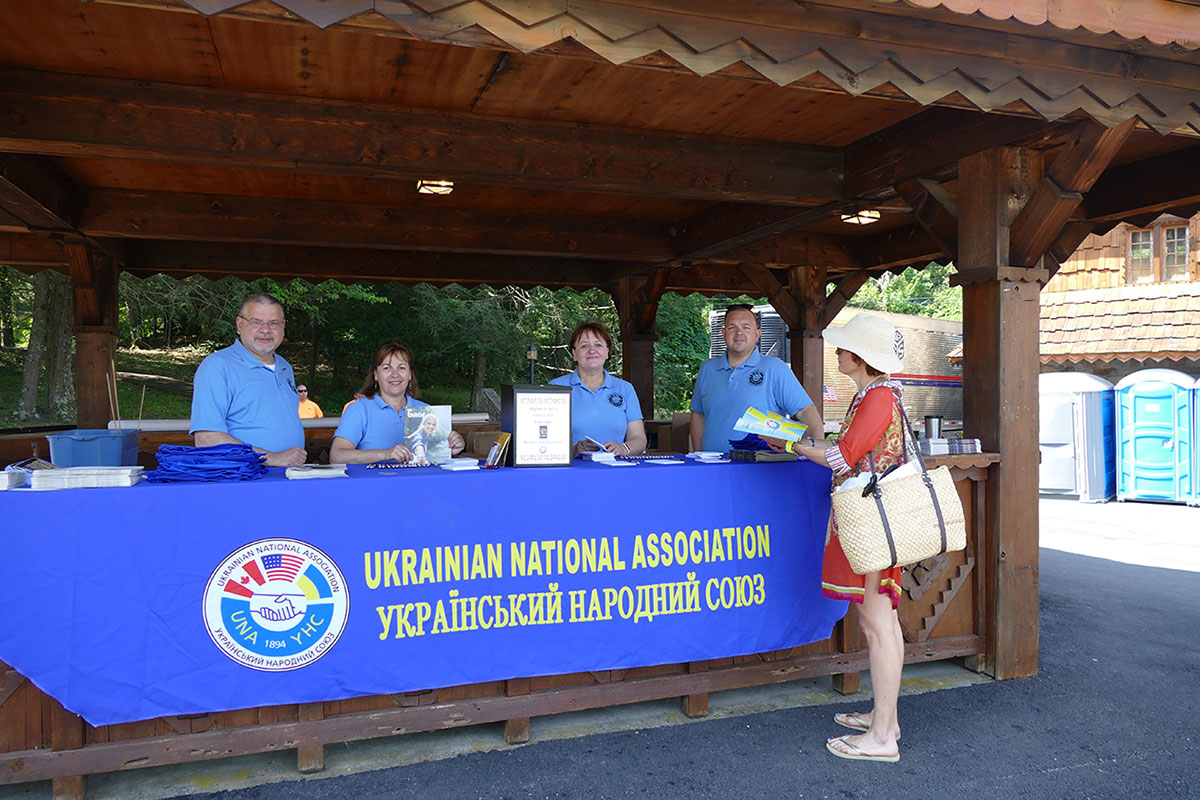
Працівники Головної Канцелярії УНСоюзу (зліва): Мирон Колінський, Марійка Дрич, Ніна Більчук та Головний Операційний Директор/Головний Секретар Юрій Симчик. (Фото: Левко Хмельковський)

КЕРГОНКСОН‚ Ню-Йорк. – Липнева Союзівка знову зачарувала численних гостей буянням квітів‚ мальовничими краєвидами‚ гостинністю господарів. Найбільше у США свято пісні і танцю – щорічний Фестиваль Української культури 13-15 липня уже 12-ий раз скликав сотні гостей до цієї оселі Центру української спадщини. Фестиваль провела Українська Народна Фундація (УНФ) з участю Українського Народного Союзу. Серед гостей цього літа відчутно переважали представники так званої „четвертої хвилі“‚ які не лише освоїлися у новій для них країні‚ а й полюбили Союзівку‚ яка багатьом нагадувала Карпати. 

Фестиваль тривав три дні і кожен мав у програмі багато цікавих подій. У вечірньому концерті 13 липня виступили гості з України. Провадив народний артист України Петро Мага – відомий український артист‚ автор пісень для відомих співаків Ірини Білик, Таїсії Повалій, Павла Зіброва. П. Мага має дар дружнього і веселого спілкування з залою‚ тож він безперервно звеселяв публіку жартами. 

З Києва приїхала Анастасія Приходько – українська естрадна співачка. Вона була активною учасницею Евромайдану, відмовилася від усіх нагород, які були їй вручені в Росії. А. Приходько гостро засуджує всіх українських співаків, які в час війни на Донбасі гастролюють Росією та виступають на урочистих концертах. Свою позицію артистка пояснює, що в такий непростий час українці „не мають бити поклони в Кремлі“. 

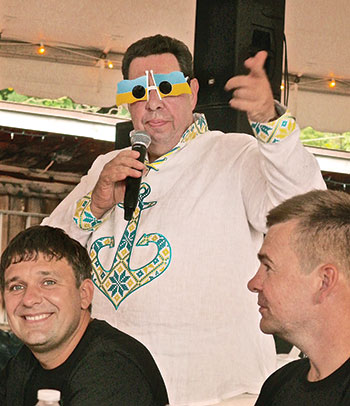
Виступив також український письменник, актор театру і кіна, телеведучий, засновник мистецької плятформи „Український культурний фронт“ Орест Лютий, насправді Антін Мухарський, який виступає у образі професора антропології Ореста Лютого. За цей проєкт він оголошений у розшук Генеральною прокуратурою Росії.

Відбувся благодійний бенкет „Ретро Львів“, учасники якого робили пожертви на розвиток Союзівки і взяли участь у льотерії (жеребкування наступного дня 14 липня провели Скарбник УНФ Рома Лісович і ведучі суботнього концерту П. Мага і Мар’янка Гаврилюк), а потім була забава до пізньої ночі під музику гурту „Браття з Прикарпаття“. 

Головною подією суботи 14 липня стали два великі концерти у літньому амфітеатрі. На відкриття свята Українські Американські Ветерани з штатів Ню-Йорк‚ Пенсильванія‚ Конектикат і Ню-Джерзі винесли на сцену прапори США та України‚ а брати Андрій‚ Ярко та Юрій Добрянські заспівали гимни обох держав. Свято відкрив вітальним словом Президент УНФ д-р Василь Шеремета. 

На жаль, у програму довелося внести деякі зміни, тому що на свято з поважних причин не приїхали з Києва народний артист України співак Олександер Пономарьов і популярна співачка Ірина Федишин. Організатори фестивалю видали нову програму із змінами, а також поширили лист, у якому висловили свій жаль з приводу цих змін і пообіцяли провести виступи артистів на наступних концертах. 

А. Добрянський був ведучим денного концерту. Академія українського танцю ім. Роми Прийми-Богачевської, у якій працюють з молоддю хореографи Лариса і Орландо Паґани, директор Анна Лонкевич-Богачевська, почала концертну програму традиційним танцем „Привіт“. У денному концерті академія показала танці „Голубка“ і „Сусіди“, а у вечірньому – танці „Мельодія“, „Сонячне коло“ та інші. 

У концертах брав участь дівочий дует „Мальви“ – Уляна і Калина Лещуки, які співали під гру бандури, а також і без бандурного супроводу. 

Усі дні фестивалю діяв ярмарок, який пропонував гостям великий вибір національного одягу, прикрас, музичних записів. Гості відпочивали у басейні, відвідували українську крамницю у Головному будинку, а молодь вирушила на прогулянку у довколишні ліси. 

Українські майстрині запрошували гостей в „Українське село“ біля Головного будинку, де їх навчали писанкарства, вишивання, інших ремесел. Координатором була Галина Шепко.

Головний Операційний Директор/Головний Секретар Юрій Симчик та працівники Головної Kанцелярії УНСоюзу і спеціялісти з забезпечення Мирон Колінський, Ніна Більчук, Марійка Дрич, Головна радна Оксана Станько скористалися нагодою, щоб розповісти людям про послуги УНСоюзу, запропонувати спеціяльну видану брошуру з цієї теми, а також свіжі числа обох газет УНСоюзу. 

Реґіональна управителька Міжнародних авіоліній України Анна Широлапова запрошували літати саме українськими літаками. 

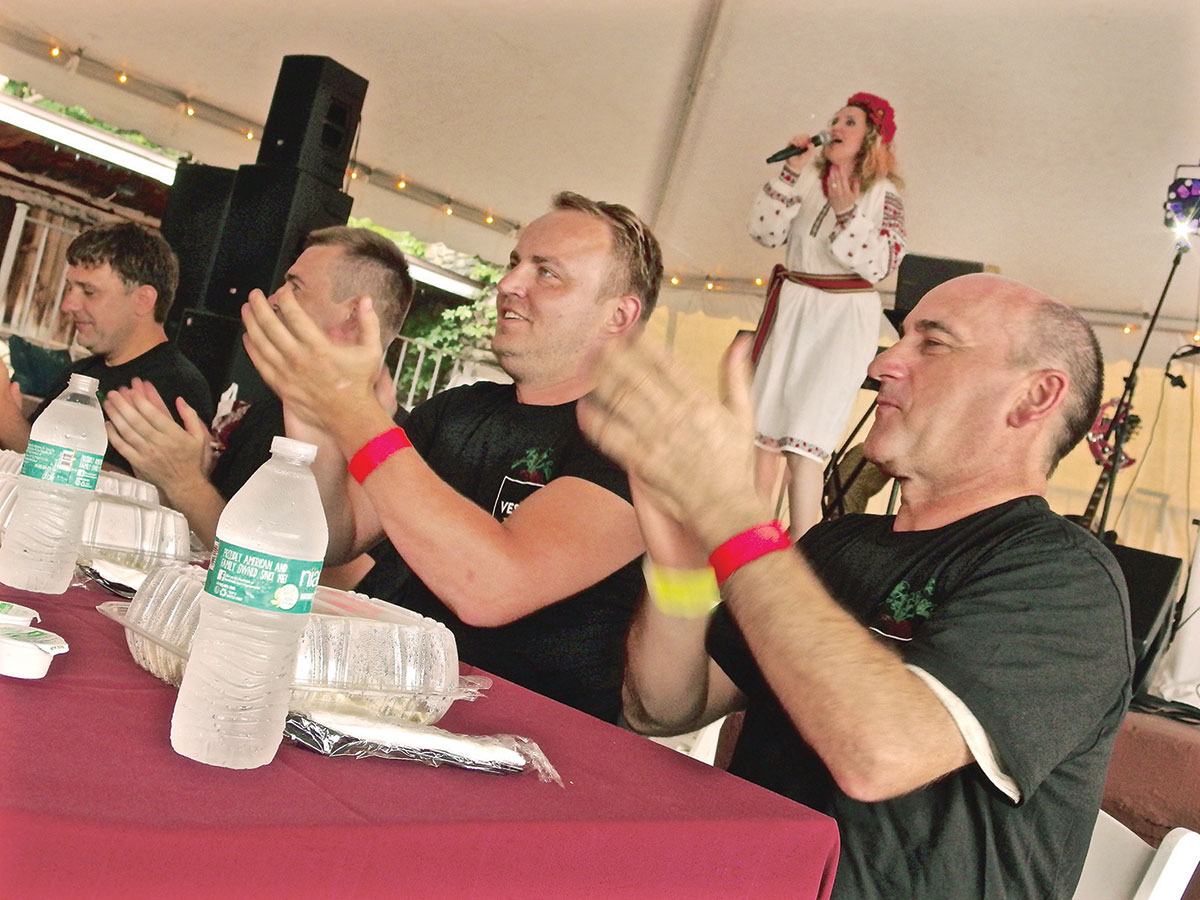
Гостям були запропоновані у затишному шатрі страви української кухні та київське пиво „Оболонь“, танці на відкритому майданчику „Веселки“ під музику гурту „Браття з Прикарпаття“. Саме тут і з участю цих музик почалися змагання з швидкісного споживання вареників, якими за традицією провадив відомий продюсер Алекс Ґутмахер. Вареники приготував і обслугу забезпечив ресторан „Веселка“ з Ню-Йорку. 

На заклик А. Ґутмахера на змагання вийшли з числа присутніх 10 добровольців. Зібралося багато вболівальників, які заохочували змагунів до їжі. Переможцем став Павло Шийка з міста Копичинці Тернопільської області. А. Ґутмахер вручив йому спортовий трофей, а Р. Лісович – грошовий дарунок. Сертифікати на відвідання ресторану „Веселка“ вручили змагунам, які ненабагато відстали від переможця. На конкурсі Христина Ві заспівала пісню про козака, який над усе любив пироги, виконала інші пісні. 

А. Ґутмахер представив учасника війни на сході України капітана Миколу Левкуна, який від початку бойових дій командував групою спеціяльного призначення і мав понад 10 відряджень у військову зону. Під час одного із завдань 2017 року поблизу Торецька вибухнула протипіхотна міна і він втратив обидві ноги. У військово-медичному клінічному центрі в Харкові він переніс дев’ять операцій. Указом Президента України М. Левкуна було нагороджено орденом Богдана Хмельницького ІІІ ступеня. Тепер він чекає на протезування в Ню-Йорку.

Суботній вечірній концерт почала М. Гаврилюк, яка представила ведучого – народного артиста України П. Магу. Він прочитав своє віршоване вітання фестивалю „Єднаймося, друзі, в красиву родину“, яке буде вміщене у наступному числі „Свободи“. 

Д-р В. Шеремета і Р. Лісович сердечно привітали гостей свята. На сцену вийшов хор „Думка“ під керівництвом Василя Гречинського з участю концертмайстра Лариси Гутникевич. Першою піснею була „Краю мій, моя ти Україно“, у якій солістом був Андрій Ґавданович. До хору приєднався скрипаль-віртуоз Василь Попадюк, що надало виступові особливого забарвлення. Потім В. Попадюк мав свій виступ і чарував публіку майстерністю гри. 

Співали також дует „Мальви“, Х. Ві, але вечірній концерт перервала бурхлива злива, було оголошено перерву, а потім продовжено концерт у закритому приміщенні „Веселки“, де виступили П. Мага, А. Приходько, Орест Лютий. І знову була забава, до якої грали „Браття з Прикарпаття“.

Останнього дня відбувся перегляд документальних фільмів „Recovery Room“ та „When We Starve“. Фільм Адріяни Лугової „Recovery Room“ розповідає про благодійну місію канадських медиків на сході України у 2015 році. Другий фільм присвячений 85-річчю Голодомору-геноциду 1932-1933 років в Україні. 

Спонзорували Фестиваль Української Культури Федеральна Кредитова Кооператива „Самопоміч“ Ню-Йорк, Федеральна кредитова спілка СУМА, Український Народний Союз.

Гості залишали Союзівку у піднесеному настрої від трьох справді святкових днів. Багато з них обіцяли повернутися на фестиваль наступного року‚ взяти участь у молодіжних таборах‚ у вересневій зустрічі колишніх студентів гімназій та мешканців повоєнних таборів („DP“). 

Soyuzivka’s 12th Ukrainian Cultural Festival celebrates global Ukrainian community

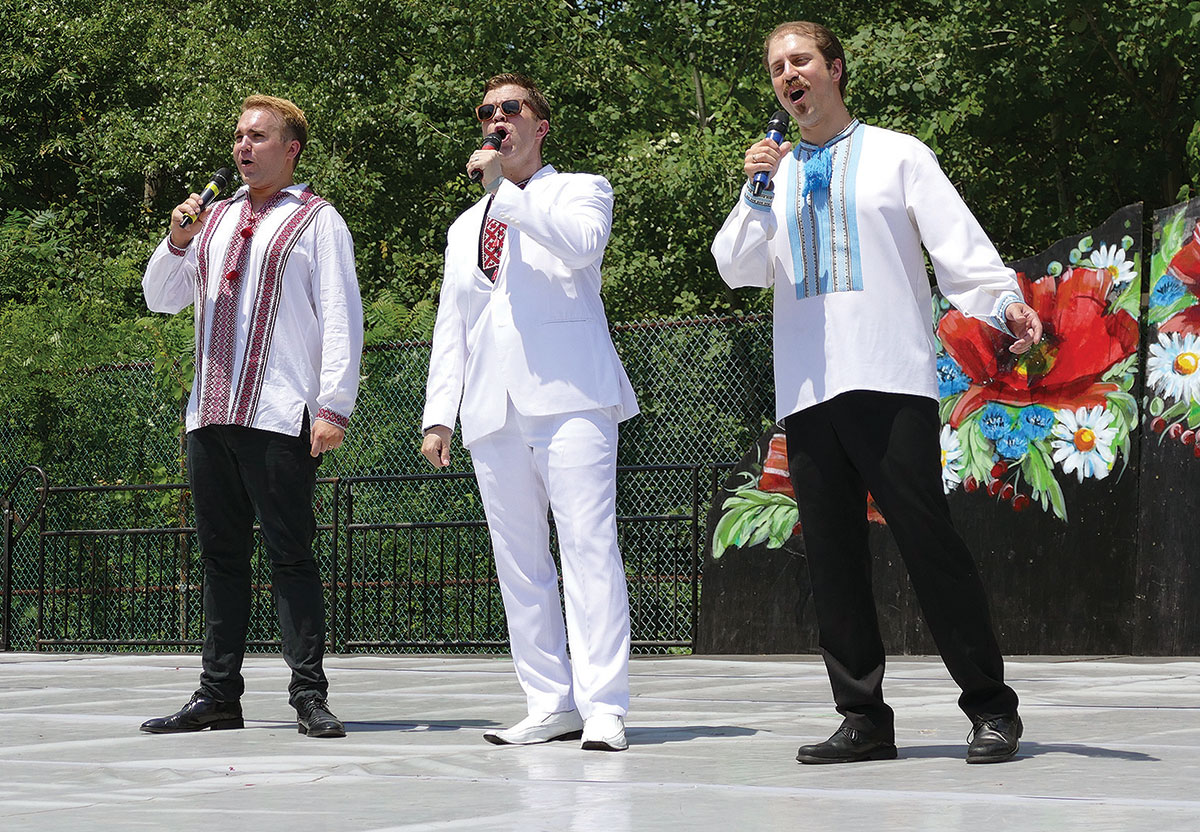
The Dobriansky Brothers vocal trio. (Photo: Levko Khmelkovsky)

KERHONKSON, N.Y. – More than mere merrymaking, Soyuzivka’s 12th annual Ukrainian Cultural Festival was above all, a celebration of the global Ukrainian family. At the same time, this festival not only illustrated changes already in place at Soyuzivka, but also pointed to bigger transformations just around the corner for all our communities.
Thousands of guests from many corners of the world, young and old, flocked to the Ukrainian National Foundation’s (UNF) mountain eyrie in the airy heights of the Shawangunk Ridge on July 13-15. In addition to sharing ethnic pride, participants were united by deep concern over issues affecting all Ukrainians: their war-torn homeland, help for students and orphans, and finding ways to popularize their rich culture.
When two star performers could not appear due to visa issues, the festival’s tireless artistic administrator Roma Lisovich (who is also the UNF’s treasurer) arranged to fly in fiery singer Anastasia Prykhodko. Ukrainian adaptability was further tested when a thunderstorm drenched the Saturday evening outdoor show, sending the audience scurrying for cover. Yet, the resilient fans did not go home. Many sheltered under vendor tents, singing their own songs. Eventually, the concert resumed inside the Veselka Pavilion, hosted by witty TV celebrity Petro Maha of Kyiv.

“Retro Lviv” fund-raiser

On Friday evening, under a tent near the Lviv Building, an event was held that addressed the heart of the matter: questions about the future not only for Soyuzivka, but for the Ukrainian community at large. Before an audience of donors, the newly elected president of the Ukrainian National Foundation, Dr. Wasyl Szeremeta outlined the foundation’s concerns, and what its activities will mean for all of us in coming years.
“There is no place like Soyuzivka!” he declared, “Yet at the same time, Soyuzivka is much more than a recreational center. I’m from Philly. Sadly, I have witnessed organizations and properties go belly-up because communities took them for granted. When the UNF took over Soyuzivka, we were able to establish this center as a non-for-profit, where donors are now able to deduct most of the amounts they contribute. More importantly, people must realize that while Soyuzivka is one important part, the UNF’s vision must involve far-reaching plans in the areas of culture and heritage for all of our Ukrainian communities.”
Consul Ilona Lapa then explained how Ukraine’s Consulate General in New York cares for Ukrainian orphans adopted by American families. (Over the following two days, I was to have more opportunities to speak at length with Dr. Szeremeta and Ms. Lapa.)

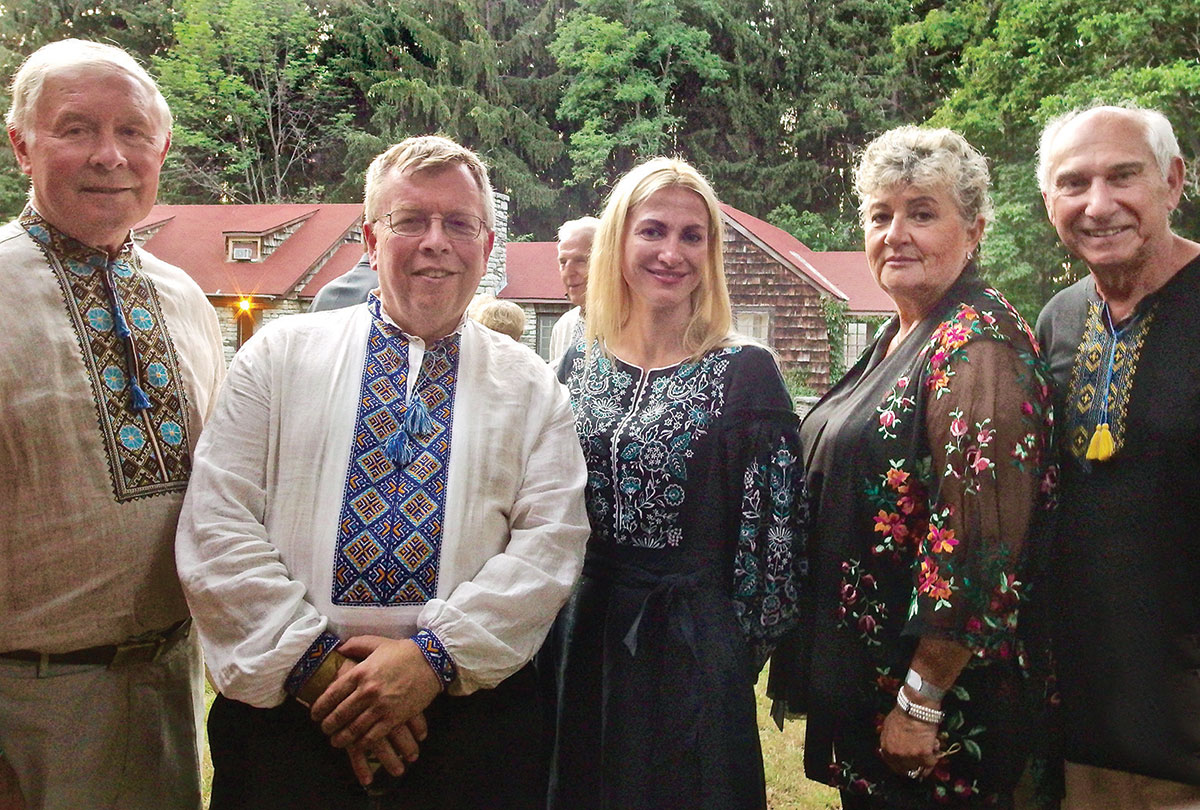
At the “Retro Lviv” fund-raiser for Soyuzivka (from left) are: Ukrainian National Association Advisor Nicholas Fil, Ukrainian National Foundation President Dr. Wasyl Szeremeta, Consul Ilona Lapa of Ukraine’s Consulate General in New York, UNA Advisor Bohdana Puzyk and UNA First Vice-President Slavko Tysiak. (Photo: Adrian Bryttan)

Meanwhile, stars from Ukraine took turns performing at this elegant dinner, superbly catered by the Soyuzivka kitchens. On this occasion, multi-talented violin virtuoso Vasyl Popadiuk took over the keyboard, improvising cocktail tunes.
Garbed in uncompromising black, pop singer Ms. Prykhodko cranked up the temperature with her silky contralto voice, belting out two songs, including “Embrace the Wings,” set to her own words and music. The popular Ms. Prykhodko had represented Russia in the 2009 Eurovision Song Contest, but in 2014 she vowed never to perform in Russia again, where she still has a huge following.
The first time she spoke Ukrainian was when she engaged a lady to teach her the language of her ancestors. Ms. Prykhodko appeared before the participants of the Maidan, actively supported a united Ukraine during Russian invasions and recently went on a tour for Ukrainian troops in the Donbas region.
Remarkably, the evening’s second performer, “Orest Lutiy,” had grown up unawares in the same Kyiv building as Ms. Prykhodko. Actor Antin Mukharsky developed the stage persona of “Orest Lutiy,” a fictitious “professor of anthropology from Stryi.”
To troll Moscow, Mr. Lutiy revels in smash-mouth songs like “Kill the Muscovite Inside You,” “O Bandera, You Ukrainian Apostle,” as well as other tunes with unprintable lyrics. (Due to his political activism, Mr. Lutiy said his family life was well-nigh shattered in 2011.) A big fan of the subversive style of the earlier Hadyukin Brothers band, he believes the counter-culture will eventually succeed in Ukraine.
Performers on the festival stage
The following day on the great outdoor stage, after the presentation of colors by Ukrainian American Veterans, the Ukrainian Dumka Chorus kicked off the concert with a series of appropriately light and festive songs, including a new arrangement by conductor Vasyl Hrechynsky.
The master of ceremonies, Mr. Maha, continued to delight everyone with his witty banter, while interspersing sincere reflections on today’s problems in Ukraine. Also featured in the afternoon show were the Dobriansky Brothers vocal trio and singer Khrystyna V. The Malvy duo of Ulana and Kalyna Leshchuk beguiled listeners with their vocals and bandura playing.
Vasyl Popadiuk demonstrated once again why he is a world-class jazz violin virtuoso, whether improvising on a soulful ballad, or off to the races with his lightning bow arm. Mr. Popadiuk, Mr. Maha, Andrij Dobriansky and Marianka Hawryluk constituted the quartet of masters of ceremonies for the festival weekend’s events.
The Roma Pryma Bohachevsky Ukrainian Dance Workshop, under executive director Ania Lonkevych and artistic director Orlando Pagan, presented its unique brand of evocative compositions, based on folk dances and structured with the elegance of classical ballet. Particularly lovely was the composition “Melodia,” choreographed by Stefan Calka.
Sunday, the final day of the festival, featured two documentary films: “Recovery Room” directed by Adriana Luhovy, which tells the story of a Canadian medical mission to Ukraine and the wounded warriors they treat; and “When we Starve,” prepared for the 85th anniversary of the genocidal famine of 1932-1933 in Ukraine, and presented by the U.S. Holodomor Committee and the Ukrainian Medical Association of North America.

Fun and games

The Ukrainian Cultural Festival weekend also offered plenty of fun and good-natured silliness. The vendors’ diverse offerings drew hundreds of guests. Meanwhile, near the Veselka pavilion, at the Ukrainian National Association’s information center in the gazebo, girls vied to have their faces painted by Shelly from Athena Entertainment. A blue-and-yellow unicorn design was the clear favorite amid the youngest set.
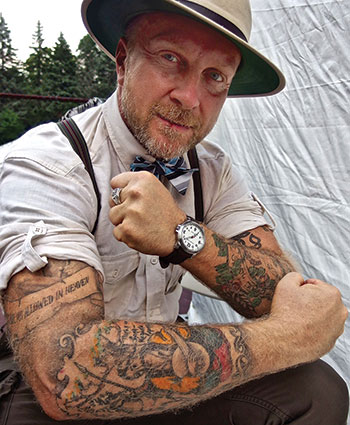
Not to be outdone, two guest artists from Ukraine conceded nothing in the body-painting department. Ms. Prykhodko exhibited arm tattoos: a crow, a lotus flower and a peony, plus the names and birthdates of her two children. But the supreme “Illustrated Man” was Mr. Mukharsky (a.k.a. Orest Lutiy), who claims to have carved a treasure-trove of tattoos over most of his hirsute hide; the ones visible on his arms show a likeness of his mother, a drawing of Kozak Mamai, the words “Love, Gratitude, Ukraine” and “No Slaves Are Allowed In Heaven.”

Sasha Gutmakher and a couple of competitors at the popular varenyky-eating contest. (Photo: Adrian Bryttan)

There was also the recreation of a Ukrainian village, or “selo,” coordinated by Halyna Shepko that offered demonstrations of Ukrainian arts and crafts by skilled artisans. The band Brattya z Prykarpattya (Liubomyr Chermak, Bohdan Zaets and Stefan Chermak) provided live music on Saturday afternoon and during the evening.
The long-anticipated varenyky-eating contest attracted cheering, partisan fans on Saturday afternoon, prefaced by Khrystyna V (who also sang on the festival stage) warbling the official contest song. Refereed tongue-in-cheek by Sasha Gutmakher, nine contestants (suspiciously, many from Ivano-Frankivsk) dove into the dainty dumplings, which disappeared deftly down their digestive ducts. When the smoke cleared, neophyte Pavlo Schyka emerged the victor. Maintaining he nibbles only modest portions back home, Mr. Schyka ruminated, “Maybe I won because I washed these varenyky down with two beers… oh, and I used my hands and fingers.” There you have it, bachelorettes – this bachelor is a real go-getter, sure to polish off anything you serve up. (Naturally, he deploys knife and fork when seated at dinner with a lady.)
And speaking of food…

Soyuzivka’s Chef “Snake”

Andrey Sonevytsky, the cheerful chef presiding over Soyuzivka’s kitchen, is a graduate of the Culinary Institute of America. Though he’s christened after Metropolitan Andrey Sheptytsky, everyone here calls him “Snake.” Since becoming head chef in 1995, Chef Snake has prepared over 1 million servings at Soyuzivka. (Confidentially, his reptilian nickname evolved when the Yonkers, N.Y., Krylati soccer coach remarked at his “snaking” around the playing field.)
For this three-day festival, the Soyuzivka kitchen staff made 20,000 varenyky (never powdered potatoes!), 800 stuffed cabbages, 700 pieces of chicken, 600 sausages, 1,200 shashlyky, 400 pounds of cabbage, 60 gallons of hot and cold borshch, and roasted 25 pounds of swordfish and 50 pounds of filet mignon. (When questioned about his velvety filet mignon, the chef replied with good humor why this particular cut should never be well-done.)
But how can anyone manage to cook hundreds of different meals daily and still serve them fresh and warm?
Mr. Sonevytsky divulged: “When cooking for large groups, the secret is to prep items ahead of time and to learn how to undercook. Once the final cooking is complete, we keep the portions warm in huge “thermoses” which can be set up anywhere on the estate grounds. You must learn to strike a balance and include extra portions just in case. My staff always enjoys any servings left over.” (No anorexics in the Snake Kitchen.)
Mr. Sonevytsky runs an efficient but happy crew under the buff lights of his subterranean galley in Main House. His assistant for 17 years, Svitlana Mycak, described all the intricate stages of prep and cooking during their sometimes 16-hour-long days. Chef Snake has catered 500 weddings at Soyuzivka and over 2,000 additional special functions, often singlehandedly. Often, he pipes in music for his workers, but always keeps a hockey stick handy for the occasional slap-shot at a rare burnt croissant (they’re made fresh in his kitchen).
Summing up, Mr. Sonevytsky said simply: “I love this place. It’s my home, not just a job.”

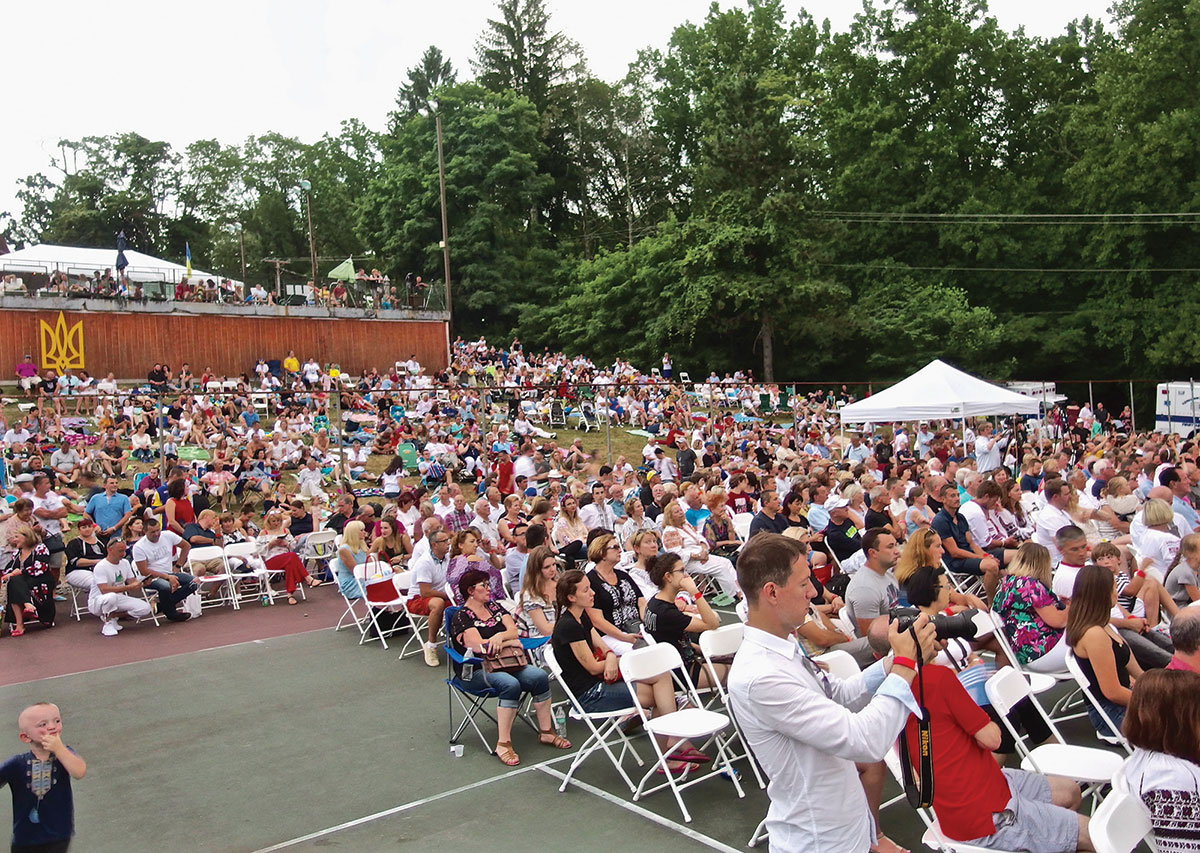
Just a few chairs are left as the crowd gathers for the start of Saturday evening concert. (Photo: Adrian Bryttan)

Soyuzivka today

Anyone who visited Soyuzivka 50 years ago would now be struck by many changes. According to Ms. Lisovich, the UNF’s extensive renovation program has included: Main House ($700,000), a new water tank and reservoir ($400,000), roads ($250,000). Still needed are a new barracks for children’s camps ($300,000), renovations for the pool deck ($225,000), Uzhhorod ($180,000), Odesa ($65,000), and a steam room and spa for Poltava ($50,000).
But it is not only that physical facilities have been updated. Mushrooming camp activities draw more and more participants, especially after Maidan. These include the popular Roma Pryma Bohachevsky Dance Academy, the Sitch sports camp, USCAK tennis tournaments, Plast Ukrainian Scouting Organization’s “Ptashata” day camp program, and Heritage and Discovery camps for children. There are also wellness, alternative medicine and yoga weekends, cooking workshops by the chef, and hiking. During the “off season,” local groups such as Polish Bible camp and ballroom dancing are hosted at Soyuzivka Heritage Center.

Blue-and-yellow unicorns were all the rage in face-painting at the Ukrainian National Association gazebo. Just ask Kateryna Golovko. (Photo: Adrian Bryttan)


UNF’s new president

On Saturday, Dr. Szeremeta shared more of the Ukrainian National Foundation’s hopes: “Soyuzivka is only one part of the UNF’s vision, which involves Ukrainian communities at large. The plan is to continue developing more cultural activities and for Soyuzivka to evolve into a real Heritage Center. Change is hard and slow. This has been the first summer where all the rooms have been available. But what to do when it rains? It would be nice to have a permanent performing arts center, or a chamber-size concert hall that could also be utilized by local performers and organizations.”
“We would be happy, for example, to host the Detroit Bandurist Chorus for their summer camp. Or have a series of Ukrainian artists in residence, and even our own museum and library. And why couldn’t all our cities contribute toward a centralized Holodomor museum right here? Eventually, the foundation might take Ukrainian publications under its wing as well. The important point is for the public to understand and support the wide-ranging work of this foundation.”

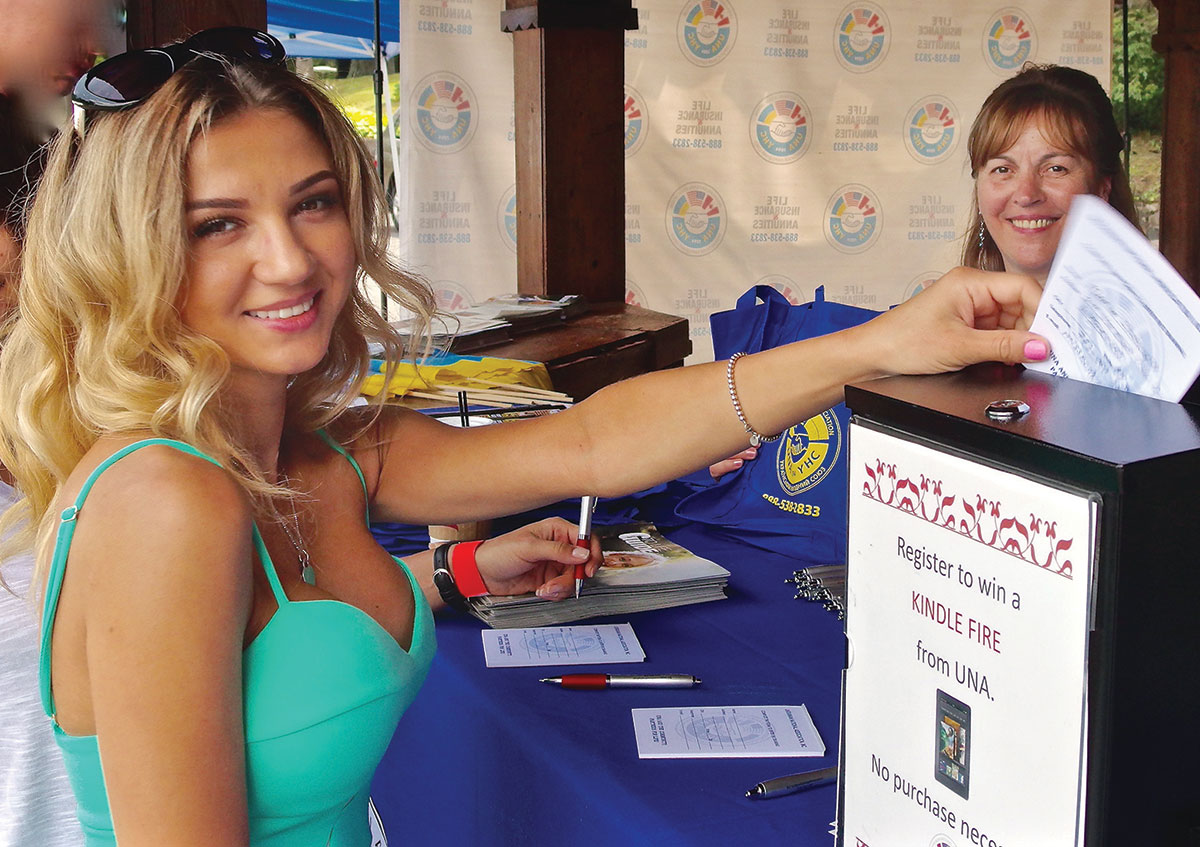
Maria Zhukevych hopes to win a Kindle, as Maria Drich of the Ukrainian National Association looks on. (Photo: Adrian Bryttan)

Best buddies for life

A truly heart-warming story is the attentive care devoted to adopted children at Soyuzivka. Even after they receive their new American parents, Ukrainian orphans are legally still citizens of Ukraine until they reach the age of 18. Consul Lapa manages the adoptive families program through the Consulate General of Ukraine in New York. More than merely making sure the children are safe and well-cared-for, Ms. Lapa helps arrange the annual weekend when all parents and their adoptees can meet while staying at Soyuzivka Heritage Center.
Ms. Lapa explained to me the problems facing children who previously had only lived in institutional buildings: “Their new form of life within a nuclear family can be complicated for children. It is most crucial that they feel genuine love and warmth, that their identity and self-esteem are respected and reinforced.” Indeed, several loving American families have even adopted and are raising Ukrainian children born with physical handicaps.
During these get-togethers at Soyuzivka, families participate in cultural programs: the adopted children are eager to learn of their heritage and history, and some of the language. They enjoy trying folk dances, singing songs, hearing the bandura, and creating their own vases or pysanky. Children who have attended several of these annual events look forward to seeing their friends from previous years. Many become soul-mates and buddies for life.

Only a small sample of Orest Lutiy’s personal tattoo collection. (Photo: Adrian Bryttan)


Student workers from Ukraine

Volunteer Bohdana Puzyk, who is an advisor on the Ukrainian National Association’s General Assembly, has been Soyuzivka’s liaison with the U.S. State Department, coordinating Ukrainian students who arrive for summers on Work and Travel permits. About 20 students annually are admitted via this program. Each is responsible for registration costs and airfare, but after a summer’s work, students can pay off those fees and still have enough left to finance one year of college education back in Ukraine.
Third-generation Ukrainian, lifeguard Patrick Monks resides with the Ukrainian students, and told me many speak four or five languages and are very hard-working. During their free time, students travel to sightsee America. Worker success stories include a local Ukrainian girl who married a boy from Dnipro; both are now successfully employed on the West Coast. Others have also made arrangements to remain behind legally, in order to study for careers in medicine and photography.
Another success story is that of Miss Soyuzivka 2018 Bella White, a Ukrainian orphan from Odesa adopted by a Pennsylvania family. She plans to study linguistics in college. Ms. White explained: “I first visited Soyuzivka three years ago as a guest; I liked it so much I signed on to work for the next two summers. Here you learn responsibility and leadership. In general, America is amazing. The first time I went to a grocery store, I couldn’t understand why folks smiled at me. People were so nice and helpful, and even if you don’t know them, they’ll help you.”

Tension mounts as the varenyky-eating contest is about to get under way. (Photo: Adrian Bryttan)

More than a great festival

There’s festivals… and then there’s festivals. To underscore this point, I’d like to add a bit of historical lore.
Just under 30 miles via County Road 3 from Soyuzivka lies Woodstock, site of the “legendary” 1969 mega-event that hosted a six-months-pregnant Joan Baez, a rain-drenched Ravi Shankar and a wacked-out Jimmy Hendrix, just one pluck away from exploding his psychedelic guitar, spazzing his way through the national anthem.
For thousands of Woodstock’s attendees it became a massive, teeming, squalid nightmare: traffic jams, reeking portable johns, scorched eyeballs and tons of resulting garbage. But, as we’ve been told, it was peace, love, music – that sort of thing. Yet even now, people are still wondering just what the heck was all that fuss about?
By contrast, in coming years the annual Ukrainian Cultural Festival and Soyuzivka itself have the potential to evolve beyond a unifying hub for North American communities and emerge as a vibrant cultural and heritage center for all Ukrainians. That is, provided everyone gets behind it and supports the UNF. If we succeed – wow! That’ll be just outtasight!… Peace.

UNA Home Office employees enjoy presentation on wellness

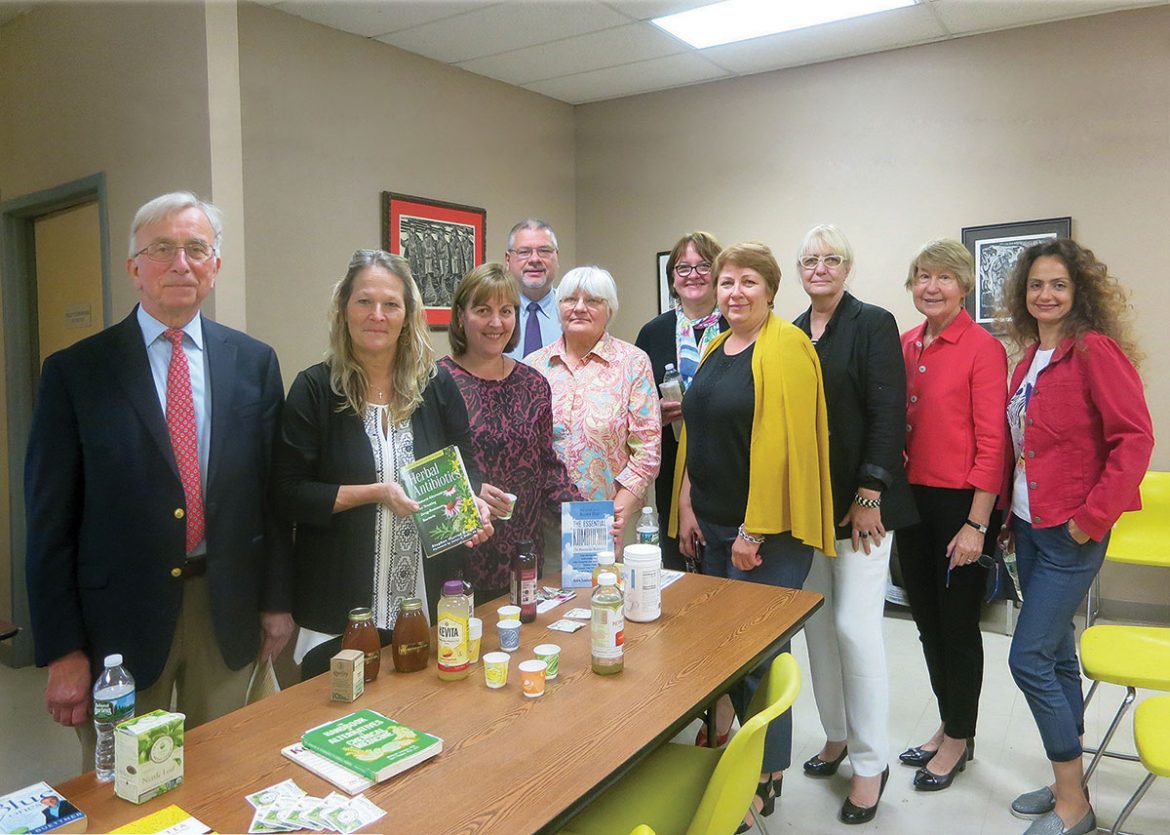
PARSIPPANY, N.J. – The Ukrainian National Association’s Home Office staff on June 11 enjoyed a presentation by Petrusia G. Kotlar, D.C., on “Wellness and Nutrition as a Means to Healthy Longevity.” Dr. Kotlar’s topics included: ethnonutrition, seasonal eating, nutritional trends and alternatives to chemical medicine. A doctor of chiropractic and well-known alternative health care provider, Dr. Kotlar has been the featured speaker at several wellness seminars organized by the UNA as part of its outreach to its members and the community. Above, Dr, Kotlar (second from left) is seen with UNA officers and employees, and a visitor to the Home Office.

Тема лекції – здорове харчування

ПАРСИПАНІ‚ Ню-Джерзі. – У Головній Канцелярії Українського Народного Союзу 11 червня відбулась презентація д-ра Петрусі Ґ. Котляр на тему „Здорове харчування як запорука здорового довголіття“.

Доповідачка вела мову про етнопродукти‚ сезонну дієту‚ харчові тенденції‚ альтернативи хемічній фармацевтиці.

Д-р П. Котляр‚ хіропрактик і фахівець альтернативних засобів лікування‚ провела вже ряд семінарів‚ організованих УНСоюзом як додаткові послуги для членів та громади.

Ukrainian National Association holds 39th Convention

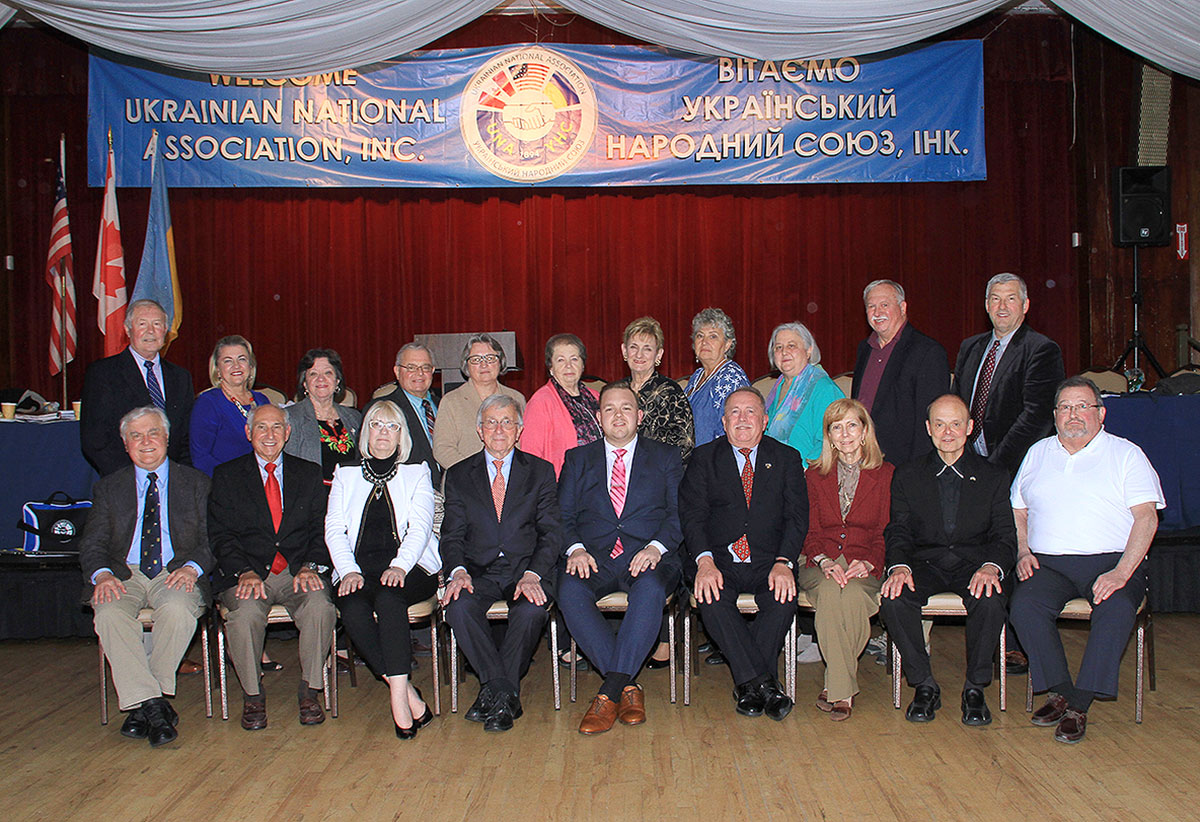
The newly elected General Assembly of the Ukrainian National Association. 
(Michael Gold/The Corporate Image)

KERHONKSON, N.Y. – Dozens of members of the Ukrainian National Association from across the United States and Canada gathered at the Soyuzivka Heritage Center on May 18-20 for the fraternal organization’s 39th Regular Convention. 

This year, the UNA marks the 124th anniversary of its founding in Shamokin, Pa., in 1894. Its official publications, Svoboda and The Ukrainian Weekly, this year celebrate 125 and 85 years, respectively.

The quadrennial convention is the highest governing body of the organization; during its business sessions, delegates review the challenges and necessary changes for the future and elect a new board of officers, auditors and advisors.

The three full-time executive officers of the UNA – President/Chief Executive Officer Stefan Kaczaraj, Chief Operations Officer/National Secretary Yuriy Symczyk, and Chief Financial Officer/Treasurer Roma Lisovich – were re-elected. The new first vice-president is Gerald Tysiak (New York), a former auditor, and the new second vice-president is Eugene Serba (Delaware), also a former auditor. Ewhen Osidacz (Quebec), a former advisor, was elected as director for Canada. 

A new slate of auditors was elected: Andrij Skyba (Illinois), Luba Walchuk (New Jersey) and George Fedorijczuk (Pennsylvania). The following were elected as advisors: Lubov Streletsky (Pennsylvania), Olya Czerkas (Florida), Oksana Stanko (New Jersey), Nicholas Fil (New York), Irene Jarosewich (New Jersey), Gloria Horbaty (Connecticut), Bohdana Puzyk (Florida), Julian Pishko (Minnesota), Dr. Andrij V.R. Szul (Penn-sylvania), Oksana Koziak (Pennsylvania) and Michael Luciw (Pennsylvania). 

New this year, and as a mark of the UNA’s move toward incorporating cutting-edge technology for its business operations, delegates received the convention reports loaded on an Amazon Kindle Fire 7 tablet. 

Convention participants began arriving at Soyuzivka on Thursday evening, May 17, with registration and dinner in the Main House, followed by an orientation session for new delegates and a meet-and-greet social. 

The convention officially opened on Friday morning on the Veselka Patio with an introduction by the current first vice-president, Michael Koziupa, and the singing of the national anthems of the United States, Canada and Ukraine led by Advisor Luba Keske of Los Angeles. Ukrainian American Veterans Petro Polny and Hnatenko Zinchuk, as well as Myron Groch, UNA director for Canada, served as a color guard. This was followed by the singing of “Zapovit” (Testament), written by Taras Shevchenko, the patron of the UNA. Marika Oprysko, dressed in a traditional Ukrainian costume, greeted the delegates with bread and salt.

Women of the UNA General Assembly – Treasurer Lisovich, and Advisors Horbaty, Puzyk, Keske, Streletsky, Czerkas, Walchuk and Maya Lew – laid a wreath at the foot of the monument to the Rev. Hryhoriy Hrushka, the first president and co-founder of the UNA, and the first editor of Svoboda.

Friday’s business session was opened with a greeting by President Kaczaraj, who welcomed guests and delegates to the UNA’s 2018 Convention. In his statement, Mr. Kaczaraj recapped the previous four years’ work and outlined plans for the coming years, noting that the UNA – the oldest  and largest Ukrainian organizations in North America – will be marking its 125th anniversary next year. 

The Rev. Dr. Ivan Kaszczak, who was his branch’s delegate at the convention, led the participants in the recitation of the Lord’s Prayer. Mr. Kaczaraj then introduced the General Assembly members seated at the dais.

Bohdan Doboszczak, chairman of the Credentials Committee, reported on the delegate verification process. Once delegates were reviewed and verified, a voting quorum was established. 

A moment of silence was held to commemorate those UNA activists and executives, notably National Secretary Christine Kozak, who had passed away during the previous four years. Branch secretaries who were remembered included: Nicholas Bobeczko, Wsewolod Hnatczuk, Michael Sawkiw, Emilia Smal, Roman Kuropas, Stephan Chorney, Eugene Gulycz, Peter Pytell, Janet Bardell, Sofia Semanyszyn and Vera Banit.

Dr. Wasyl Szeremeta was elected as the convention chairman, Mr. Skyba was elected vice-chairman, and Dr. Szul was tapped as the convention parliamentarian. Recording secretaries for the Convention were Christine Syzonenko and Lydia Semanyszyn.

An 11-member Election Committee, chaired by Dr. Andrew Hrechak, was selected by the convention. Other committees selected included the Petitions Committee, Resolutions Committee, Press Committee, as well as sergeants at arms.

Selected prior to the Convention were the Committee on Revision of By-Laws and the Finance Committee.

Mr. Kaczaraj introduced the convention keynote speaker, Joseph Annotti, president of the American Fraternal Alliance, the umbrella organization of fraternal benefit societies in the United States and Canada. 

Mr. Annotti noted that one of the most important trends in our fraternal system is the regulatory emphasis on corporate governance. He emphasized that regulators believe there is a direct correlation between good decision-making (i.e., governance) and organizational sustainability.  The preferred governance structure, and one they believe has proven to be the most effective for both not-for-profit and for-profit corporations – is one in which a society’s members or delegates elect qualified board members and then the board is responsible for hiring a qualified CEO.  Then the CEO is charged with hiring a management team to assist him or her in managing the operations of the organization. 

This structure enhances the accountability of the CEO to the board, and the board to the members; enhances the ability of the organization to identify and retain the most highly qualified leaders; and results in the organization’s leaders making sound decisions for the benefit of its members – current and future.

Mr. Annotti further noted that most fraternals have implemented similar governance structures or are making progress toward doing so soon. Despite this fact, many society leaders still bristle at the notion of making such significant changes to their corporate governance, arguing: Our governance structure has served us well for more than 100 years. We are financially strong and don’t need anyone telling us how to run our organization. This attitude will negatively impact the long-term sustainability of these fraternals in the future as corporate governance laws are being adopted across all states, Mr. Annotti commented. 

Mr. Annotti also noted that essential to membership growth is the adoption of new technologies to appeal to the younger generation through online applications, text messages, e-mail, focusing on phone and web interfaces. “Youth do not attend lodge [branch] meetings,” he said.  Ultimately, Mr. Annotti noted, each fraternal society must consider that “to find your way, you must first find your why.” 

The UNA’s structure has not changed since 1894, and today, Mr. Annotti said, the organization must focus on flexibility, adaptability and a good governance structure. These will help to ensure that good decisions are made by the UNA leadership and secure the organization’s future.

Following a break for lunch, Mr. Kaczaraj delivered his “State of the UNA Address,” with a focus on the slogan “Success by Design.” He noted that he was proud to announce significant positive financial results for the period since the previous convention in 2014. Five years of both significant capital surplus and net income growth are evidence of the UNA’s continued success. The UNA continues to thrive, thanks to prudent financial management and an adaptable business model. As of December 2017, “UNA’s total net admitted assets stand at $187.8 million, and our surplus stands at $10.6 million, a milestone event, and our net operating income reached $1.3 million,” he said.  

Mr. Kaczaraj also cited the sale of Soyuzivka in 2015 to the Ukrainian National Foundation, an affiliated company that performs charitable activities on behalf of the UNA. 

Mr. Kaczaraj stressed that the UNA must continue to grow both its life insurance and annuity products in the future.

National Secretary Symczyk highlighted the reasons for choosing the convention theme “Success by Design,” as success isn’t something achieved by accident, but rather by design. The UNA’s achievements over the past four years were accomplished following a carefully designed strategic plan, he said. New regulations, industry experience and adapatability will need to guide the UNA’s vision for the future.

Mr. Symczyk also recalled his journey across the U.S. to visit UNA districts, branches and members.  The UNA looked to partnering with other organizations in community events to broaden its membership outreach and increase the UNA’s visibility. Community breakfasts were only one type of the successful events that helped expand the UNA’s prominence and role in the community. Another successful effort was the UNA’s “Ridna Shkola” program, used as a means to educate the community about the UNA and interact with potential members.

The UNA has significantly increased its online presence with social media through sites such as Facebook and Twitter, as well as LinkedIn. Mr. Symczyk also informed the convention that the UNA has launched a new modern website with interactive online tools for members. More information will be released by the UNA as it becomes available.

Partnering with other fraternals to minimize costs is another avenue the UNA has pursued.  For example, the UNA is one of the fraternals that joined efforts to engage a marketing PR company to develop a branding and marketing campaign. The UNA launched its latest “Guide to Life” magazine, which outlines UNA products in Ukrainian and English. Both an online interactive edition and print copies are available. 

Mr. Symczyk thanked UNA employees who collaborated on the content and design of the website and the new magazine, adding that more additions are in the works. Mr. Symczyk explained how he and Ms. Lisovich have represented the UNA at American Fraternal Alliance events in New Jersey and nationally, where the UNA has cultivated a network of fraternal leaders who share their experiences with issues and industry challenges. Mr. Symczyk cited the work and example of his predecessor, the late Christine Kozak, and the support he has received from the staff of the Home Office during the difficult time after her death.

Treasurer Lisovich welcomed the delegates and noted it had been a challenging, yet rewarding four years. She said there was much good news to report as 2017 was a milestone year for UNA. The UNA’s financial capital surplus, which is the fiscal bedrock of every insurance company, has more than doubled since the 2014 Convention, to $10.6 million as of December 31, 2017.  This is a significant improvement from the $4 million achieved as of 2013 yearend.  Not since 1993 has the UNA stood on such a solid financial foundation, she underscored.

Strong and profitable operating results, as well as strong investment returns, continue to bring about positive results, even though, industry-wide, annuities (the main revenue generator for insurance companies) and life insurance products were experiencing a downtrend.  She emphasized that success rarely happens at random.  Successes happened with a combination of hard work – the efforts of many, a dedicated staff and the implementation of a strategic plan.  

Also, through the period 2014-2017, the UNA achieved a solid financial performance with annual net profit gains of an average of $1 million-plus during each year.  The UNA has not had five years of consecutive net profits since the late 1980s, Ms. Lisovich observed. On the other side, careful expense management has resulted in a significant reduction in fraternal benefit expenses – and overall general administrative expenses were below projections. 

Lastly, she reported that the UNA will need to continue to build upon the outstanding performance record of the past four years to ensure the UNA’s corporate sustainability as an insurance company for the next 100-plus years. 

On the regulatory front, by 2020 the UNA will need to change its corporate governance structure.  This will be a milestone change for the UNA that will help ensure its future. 

The UNA’s publications were covered in the report given by Roma Hadzewycz, editor-in-chief of Svoboda and The Ukrainian Weekly. She stressed the important role of the newspapers in the UNA’s marketing and communications. Ms. Hadzewycz acknowledged the employees of the newspapers present at the convention, including Petro Chasto (Svoboda), Matthew Dubas (The Ukrainian Weekly) and Christine Syzonenko (The Ukrainian Weekly). 

The advisors, who had submitted their reports to all delegates prior to the convention, had an opportunity to add to their reports.  Messrs. Groch and Oscislawski, outgoing director for Canada and second vice-president, respectively, thanked the UNA for allowing them to serve and to represent the UNA. They opted to retire and have been elected as honorary members of the UNA General Assembly.

The Auditing Committee noted that there was an addendum to their report, with print copies to be made available to the delegates. The convention body agreed that the Auditing Committee’s reports that were made throughout the four-year period and the Executive Committee’s responses would be mailed to the delegates.

Following discussion and questions from the delegates, the convention unanimously accepted the reports of officers, auditors and advisors.

The Secretaries Committee discussion on “Roadmap for the UNA,” led by Mr. Symczyk and Oksana Stanko, focused on increasing the UNA’s membership and highlighted the recommendations from the previous convention. The UNA has developed classes for branch secretaries and invited them to be guests at the UNA Convention. 

The committee recommended that the UNA annually host a one-day meet-and-greet, and that branch secretaries work to encourage youth to become officers, learning about the work of the Home Office and attending courses for UNA secretaries and organizers. Mr. Symczyk added that the UNA continues to investigate options and opportunities for new products, including a webinar service. 

Friday’s business session concluded with the Election Committee reading off the names of candidates entered in the primary round of elections to the General Assembly. Each candidate then had to accept or decline the nomination.

That evening, a “Vyshyvanka Dinner” was hosted on the Vorokhta Lawn under a tented canopy. The UNA anthem was performed by soprano Swiatoslava Kaczaraj with accompaniment by Dr. Szul on electric piano. Awards were presented to UNA secretaries, district chairs and General Assembly members, as well as Home Office staff, for their years of service to the UNA.

After dinner, guests enjoyed Lvivska Kava dessert and coffee, followed by a lively sing-along session accompanied by a trio of accordionists – Mr. Koziupa, Alex Chudolij and Mr. Dubas.   

As delegates gathered for the Saturday session, a group photo was taken by a professional photographer in the Veselka Hall. The convention resumed business with a comprehensive presentation by Dr. Shul, chairman of the By-laws Committee, on proposed amendments to the current UNA By-Laws, which forsee a corporate governance structure that replaces the Executive Committee with a new Corporate Board of Directors, with the financial competencies and fiduciary responsibility to run insurance operations in accordance with new with regulatory mandates. A separate Fraternal Advisory Board is being proposed to handle the fraternal side of the UNA’s activity. 

Delegates approved an amendment to the By-Laws, whereby UNA’s three full-time executive officers will now be known as President/Chief Executive Officer, Chief Operating Officer/National Secretary and Chief Financial Officer/Treasurer. 

Another amendment approved by the required two-thirds majority vote provided for the appointment of four standing committees of the General Assembly: Finance Committee, Governance and Compliance Committee, Nominations Committee and By-Laws Committee.

In addition to corporate governance, the discussion at the convention concerning the proposed new UNA By-laws also included the important topic of succession planning, both in terms of nominees for election to UNA offices and the filling of vacancies, due to disqualification or disability, death or resignation, on the UNA’s General Assembly.

The final round of elections was held after each candidate presented a statement. When the session reconvened after lunch, the By-Laws discussion continued with voting taking place on two motions. 

The Finance, Petitions and Resolutions committees also presented their reports and recommendations, and the Election Committee announced the results of the final vote for General Assembly positions.

On Saturday evening, a fund-raising gala banquet for Soyuzivka was hosted by the UNA inside the Veselka Hall. 

Master of ceremonies Roman Hirniak invited re-elected UNA President Stefan Kaczaraj to be sworn in by newly designated Honorary Member Oscislawski. The remainder of the new General Assembly was sworn in by Mr. Kaczaraj, who administered the oath of office.

Mr. Hirniak welcomed the newly installed consul general of Ukraine in New York, Oleksii Holubov, Consul Denys Semenovych, Judge Bohdan Futey, and the Rev. Dr. Kaszczak of Holy Trinity Ukrainian Catholic Church in Kerhonkson. Guests included Christine Bihun, Ukrainian American Youth Association; Stepan Kaczurak, chairman of the Ukrainian National Federal Credit Union, and his wife, Natalya, as well as Zenon Halkowycz, CFO of the credit union, who was joined by his wife, Olenka; and Walter Zarycky, president of the Center for U.S-Ukraine Relations.

The banquet’s keynote address was delivered by Andrew Futey, president of the Ukrainian Congress Committee of America. Mr. Futey noted the illustrious history of the UNA since its founding in 1894 in Shamokin, Pa., and pointed out that next year the UNA will celebrate its 125th anniversary. In the course of its history, he said, the UNA has made lasting impacts and contributions to the community, “by publishing two of the most important newspapers in North America – the Ukrainian-language Svoboda and The Ukrainian Weekly in the English language – an outlet that has allowed our community to keep abreast of Ukraine-related news, but even more importantly, to be informed about the work and accomplishments of our organized Ukrainian American community.” 

Other notable contributions of the UNA included its role in the formation of the Ukrainian Congress Committee of America in 1940 and the creation of the Ukrainian World Congress (known previously as the World Congress of Free Ukrainians) in 1967. Also noteworthy, Mr. Futey continued, was the UNA’s purchase of the property today known as Soyuzivka Heritage Center, which is now owned by the Ukrainian National Foundation. 

Mr. Futey went on to explain the role that the UCCA serves in the community. He spoke also about his visits to Ukraine, where he met with high-level officials and government representatives, as well as religious hierarchy and representatives of various NGOs. Through these trips to Ukraine, the UCCA has gained a solid understanding of the situation on the ground in Ukraine in the face of Russian aggression and has been able to communicate that reality to U.S. government officials to foster cooperation in economic sanctions against Russia as well as continue support for Ukraine by supplying lethal defensive weapons. Mr. Futey noted that Javelin anti-tank missiles and anti-sniper equipment had already arrived in Ukraine.

He said the UCCA invites all of its members and member organizations to join them on July 18 in Washington for its Ukrainian Day advocacy event, and he thanked the UNA for its continued advocacy for Ukraine and support of the UCCA. He urged members of the community to become involved, from festivals to bazaars, politics to cultural events – there are many ways for people from all walks of life to be active. Mobilizing the community is important now more than ever, Mr. Futey underscored, as the world wakes up to the reality of the Russian menace and formulates a response. 

Mr. Futey added: “Here I would like to emphasize the importance of our Ukrainian American mass media – in particular Svoboda and The Ukrainian Weekly – these newspapers provide forums for our community to not only be informed of what’s going in Ukraine, but more importantly, what is happening within our organized Ukrainian American community. And they deserve our support – so if you do not subscribe to these papers, I implore you to do so as soon as possible. By subscribing, you will not only become plugged in to our efforts to support our brothers and sisters in Ukraine, but will learn about the various endeavors to maintain and strengthen our vibrant Ukrainian American community.” 

Consul Holubov, in his statement of greeting, noted that the UNA is a global example as the oldest and largest Ukrainian organization in North America. “As Ukraine defends itself against Russian aggression, Ukraine thanks [you for] the support of the UNA and wishes the UNA continued success as it celebrates its 39th Convention,” he said.

Yuriy Vitrenko, deputy permanent representative of Ukraine to the United Nations, wished the UNA and its convention participants continued success in the realization of the organization’s plans and goals. He thanked the UNA for its support as one of the oldest Ukrainian diaspora organizations. 

Dr. Szeremeta, president of the Ukrainian National Foundation, also greeted the banquet guests. He noted how through Soyuzivka there is an integration into various facets of the Ukrainian community, such as credit unions and various other organizations, and he reminded guests to respond to the call to action to preserve this Ukrainian diaspora treasure. He called for support of Soyuzivka’s capital improvement needs, saying, “The only thing necessary for the triumph of evil is for good people to do nothing.”

Walter Kozicky of SUMA Yonkers Federal Credit Union explained the longstanding history of cooperation between the UNA and SUMA Yonkers, as the two organizations continue to work together toward shared goals of supporting Ukrainian youth. As the UNA celebrates its 125th anniversary in 2019, I wish “eternal youth for Batko Soyuz” and peace for Ukraine, he said.

Marianna Zajac, president of the Ukrainian National Women’s League of America, recognized the work of the UNA’s publications, Svoboda and The Ukrainian Weekly, and congratulated them on their work as part of the longstanding history of the UNA. She said she looks forward to continued cooperation between the UNA and the UNWLA.

Guests enjoyed their dinner, prepared by Chef Andrij Sonevytsky. Headlining the evening was the renowned Taras Chubay of Ukraine, who sang songs while accompanying himself on guitar. Singer Pavlo Tabakov from Ukraine entertained with ballads and pop tunes, as well as duets featuring vocalist Anya Kosachevich of New Jersey.

The 39th UNA Convention was successfully concluded with delegates bidding farewell to one another on Sunday morning following breakfast served in the Main House. Special thanks went to the 39th UNA Convention Organizing Committee: Myron Kolinsky, Nestor Paslawsky, Ms. Puzyk, Ms. Walchuk, Mr. Symczyk and Oksana Trytjak. In addition, Soyuzivka General Manager Paslawsky, Assistant Manager Stefko Drabyk and the entire Soyuzivka staff were cited for their hard work in helping to make the convention run as smoothly as possible. 

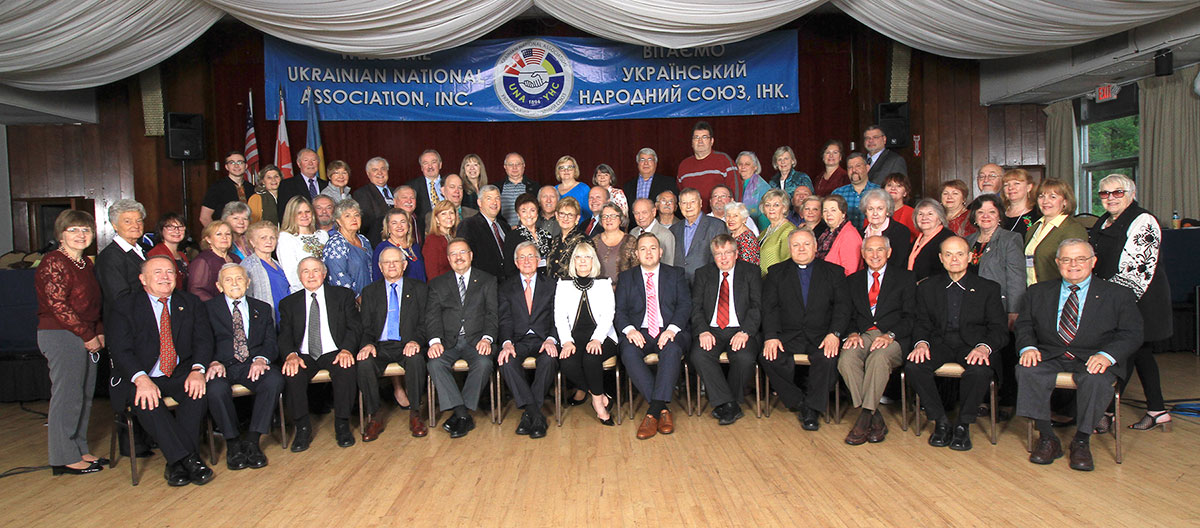
The participants of the UNA’s 39th Regular Convention, held on May 18-20 at Soyuzivka Heritage Center.
(Michael Gold/The Corporate Image)

UNA General Assembly
for 
2018-2022

PRESIDENT/CHIEF EXECUTIVE OFFICER
Stefan Kaczaraj 

FIRST VICE-PRESIDENT
Gerald Tysiak 

SECOND VICE-PRESIDENT
Eugene Serba 

DIRECTOR FOR CANADA
Ewhen Osidacz 

CHIEF OPERATIONS OFFICER/NATIONAL SECRETARY
Yuriy Symczyk 

CHIEF FINANCIAL OFFICER/TREASURER
Roma Lisovich 

AUDITORS
George Fedorijczuk
Andrij Skyba
Luba Walchuk

ADVISORS
Olya Czerkas 
Nicholas Fil 
Gloria Horbaty
Irene Jarosewich
Oksana Koziak
Michael Luciw
Julian Pishko
Bohdana Puzyk
Oksana Stanko
Lubov Streletsky
Andrij V.R. Szul 

holiganbet güncel girişholiganbet güncelholiganbet girişholiganbetjojobet güncel girişjojobet günceljojobet girişjojobet